White Star - 2024
White Star - 2024
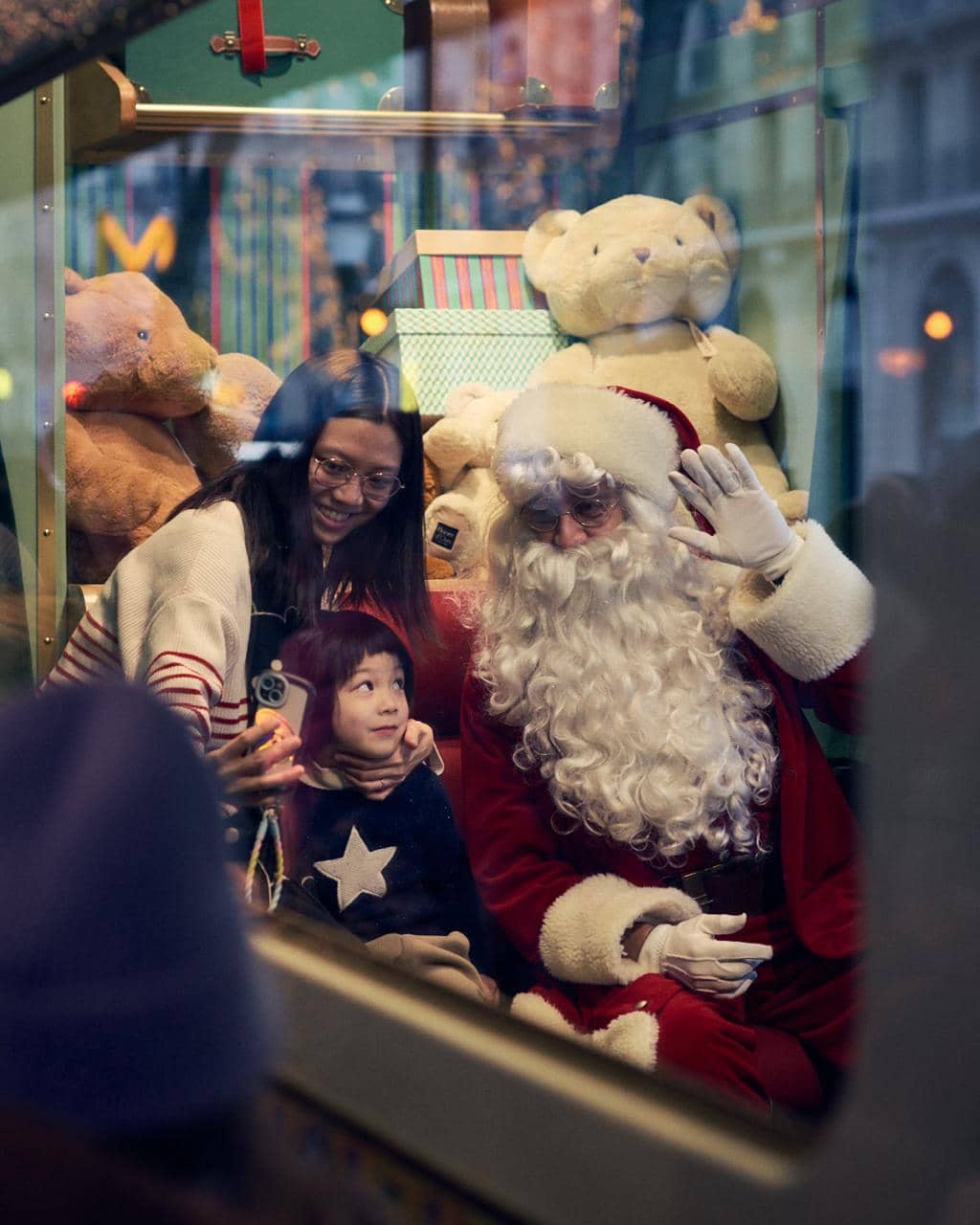
Through a glass window, a festive booth: Santa in red suit, white beard, waves cheerfully. Beside him, a woman with glasses, cream sweater with red stripes, smiles warmly, holding a young child. The child wears a dark sweater with a white star, gazes up at Santa with wide‑eyed wonder. Behind them, plush teddy bears, wrapped gifts. The foreground is glass, perhaps reflecting the outside world.
The title isolates one detail: the white star on the child’s sweater. It is a small emblem, a decorative shape, but it becomes the focal point. The star is not celestial; it is knitted, domestic, a symbol of innocence or perhaps of hope. The photograph frames it as the quiet centre of a noisy scene.
What holds the image together is the glass barrier. It separates the viewer from the performance, making the festive booth feel like a diorama. Santa’s wave is generic, the woman’s smile professional, the child’s wonder possibly genuine. The glass adds a layer of distance, turning the scene into a spectacle observed, not entered.
I distrust the sentimentality of the moment, but the photograph resists easy warmth through its framing. The glass reflects something—maybe the photographer, maybe the street—intruding on the perfect holiday tableau. The star becomes a puncture in that perfection, a small point of light in a dark sweater.
The image belongs to Easy Realism, which trusts reality without polishing it. Here, reality is already polished: a commercial Santa booth designed to produce wonder. The photograph does not critique that commerce; it simply shows it, with the glass as a reminder that we are outside, looking in. The star is the only thing that feels unscripted, a detail not part of the set. That may be enough.