Watchtower over the tragedy - 2025
Watchtower over the tragedy - 2025
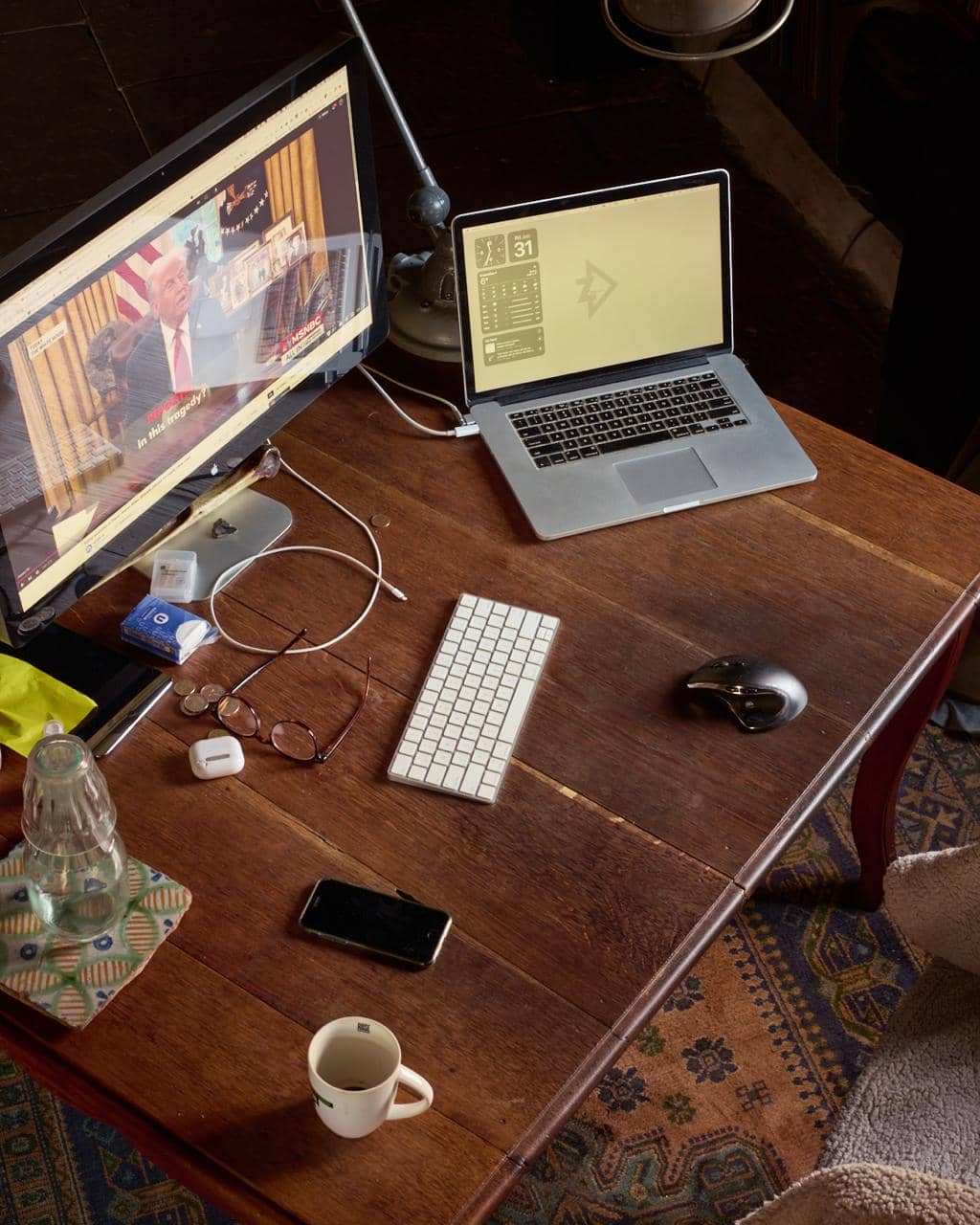
An overhead view of a cluttered wooden desk, warm‑toned in dim light. A large monitor displays a news broadcast featuring Donald Trump. Beside it, a silver MacBook shows a minimalist desktop: a calendar widget, and a logo—not a Star of David, but the logo of zbrass.com. A slim white keyboard, black ergonomic mouse. Scattered objects: glasses, AirPods case, coins, smartphone, glass water bottle on a patterned coaster, empty coffee mug.
The title calls this a “watchtower over the tragedy.” The tragedy is on screen—Trump, politics, the news cycle. The watchtower is the desk, the vantage from which we observe. But the logo changes everything: zbrass.com refers to Arthur’s own commercial internet period, a chapter of his life now reduced to an icon on a desktop. The tragedy becomes not only public but personal, a history folded into the clutter.
What holds the image together is the collision of scales. The global news sits beside the private symbol. The overhead angle flattens both into a pattern of objects, making the scene feel systematic and chaotic at once. The zbrass logo is a ghost from a past venture, now a decorative pixel. Its presence suggests that our pasts are also items on the desk, widgets we glance at between crises.
I distrust the neatness of the reading, but the photograph earns its complexity through sheer density of detail. The mug is empty. The water bottle half‑full. The glasses wait. The image does not judge; it inventories. The watchtower is not a place of clarity but of accumulation. The tragedy is not only what we watch, but what we keep beside us while we watch.