Easy Illusion - 2026
Easy Illusion - 2026
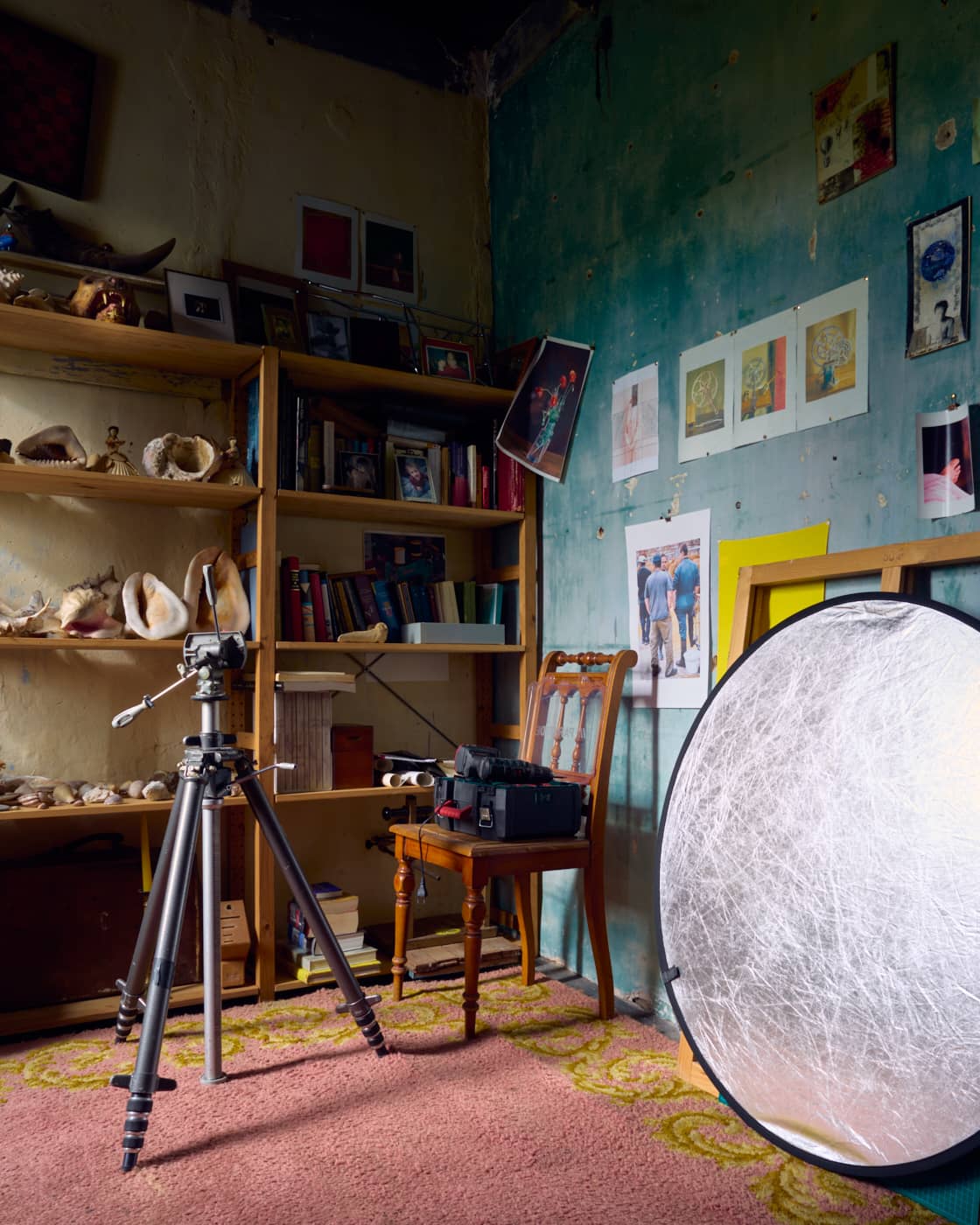
The black tripod stands on a pink patterned rug, its legs angled toward a wooden chair that holds a closed equipment case. Behind them, shelves overflow with books, seashells, a bone jaw, and framed photographs. The walls are two different colours—peeling yellow on the left, distressed teal on the right—and are pinned with prints and pictures. The light comes from the left, casting soft shadows across the rug and the chair’s polished wood.
A studio is supposed to be where things are made, but here the only thing pointed at the chair is the tripod itself. The camera is absent, or perhaps it is the one taking the picture. The shelves are not a backdrop; they are the archive. The walls are not a set; they are peeling. This is not a stage for a portrait but a still life of the tools that make portraits.
The title calls it an “easy illusion.” That feels both accurate and too helpful. The clutter is real, the wear is real, the light is real—everything the eye can trust is here. Yet the arrangement—tripod aimed at an empty chair, the shelves curated like a museum of a working life—creates a second layer: the illusion that this scene is accidental. The photograph wants to have it both ways: to show the mess of making and to frame that mess as a composition.
Easy Realism distrusts the slick image. This picture is anything but slick. Its tension lies in that distrust: it refuses to clean up, yet it cannot help but compose. That may be its limit. The illusion is not that the studio exists, but that its existence can be shown without becoming a picture. I am not sure it succeeds. The tripod gives the game away: we are looking at a setup, even if the walls are peeling.