Paroisse Saint-Paul Saint-Louis, Rue Saint-Antoine - 2025
Paroisse Saint-Paul Saint-Louis, Rue Saint-Antoine - 2025
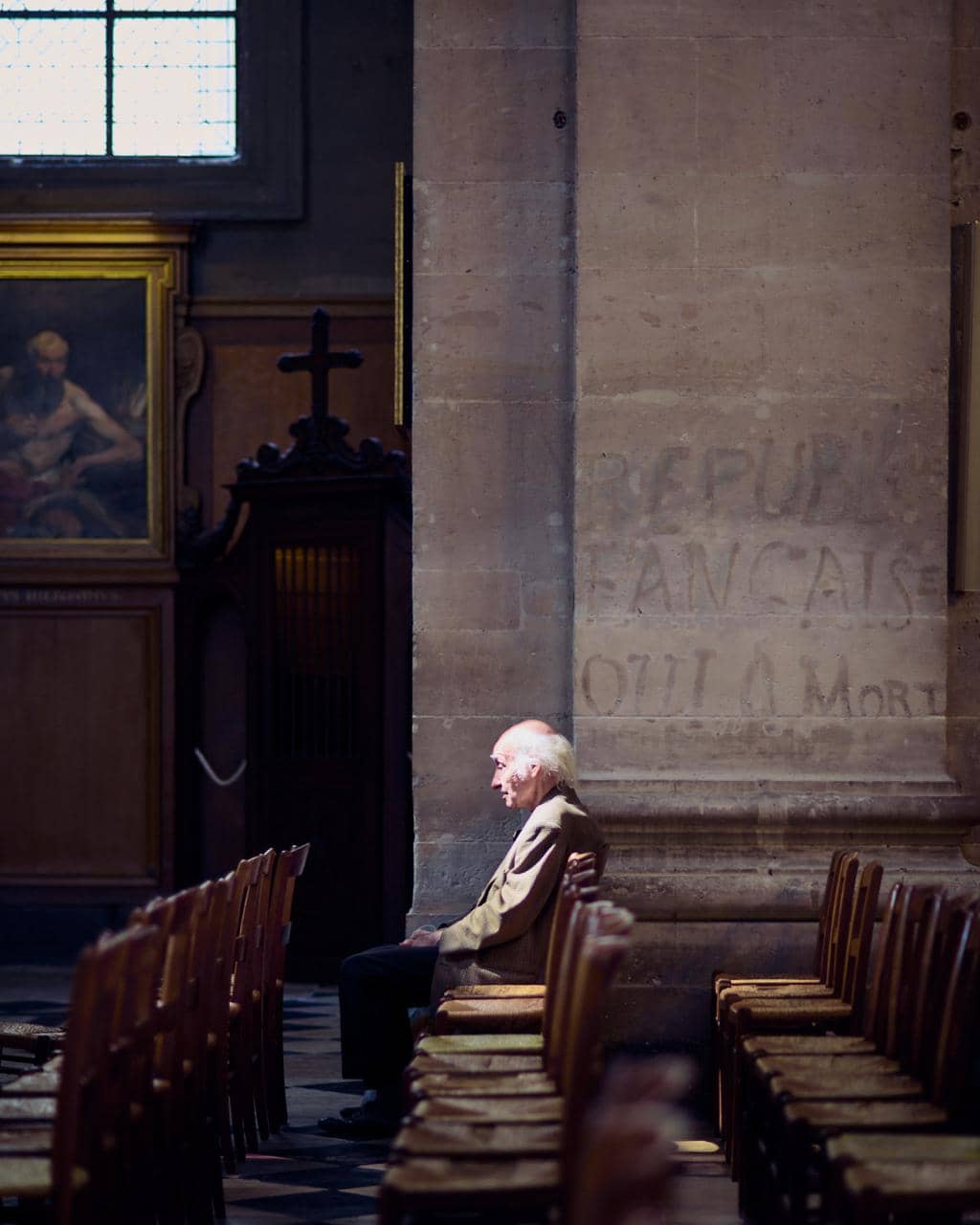
An old man with white hair sits alone on a wooden pew. A sliver of sunlight from a high window cuts across his profile. Behind him, a massive stone pillar bears faint graffiti: “REPUBLIQUE FRANCAISE” and “OUI A LA MORT.” To the left, a dark confessional and a framed painting of Saint Paul. The rows of pews stretch into shadow.
The title names the church: Paroisse Saint‑Paul Saint‑Louis, Rue Saint‑Antoine. The painting in the background is the old Saint Paul—the apostle, the convert, the writer of letters. The graffiti speaks of the republic and of death. The man sits between them, silent, as if holding both in his gaze.
This is Easy Realism in a sacred space. The photograph does not dramatize the light or the solitude; it lets them be. The graffiti is not highlighted; it is weathered, almost faded. The painting is just there, part of the church’s furniture. The image trusts that these elements, simply placed side by side, will generate tension. And they do.
I am not sure whether the tension is earned or inherited. The church already holds history; the graffiti already carries politics. The photograph records, but does not intervene. That may be its strength: it does not need to point. The man’s presence—alone, elderly, contemplative—becomes the hinge between the sacred and the secular, between faith and the state’s blunt proclamation.
The year is 2025. The republic and death are still written on the pillars. Saint Paul still looks on. The photograph does not resolve the contradiction; it lets it stand. That feels like a form of respect, both for the place and for the viewer’s intelligence.