The bicycle of the Photographer - 2019
The bicycle of the Photographer - 2019
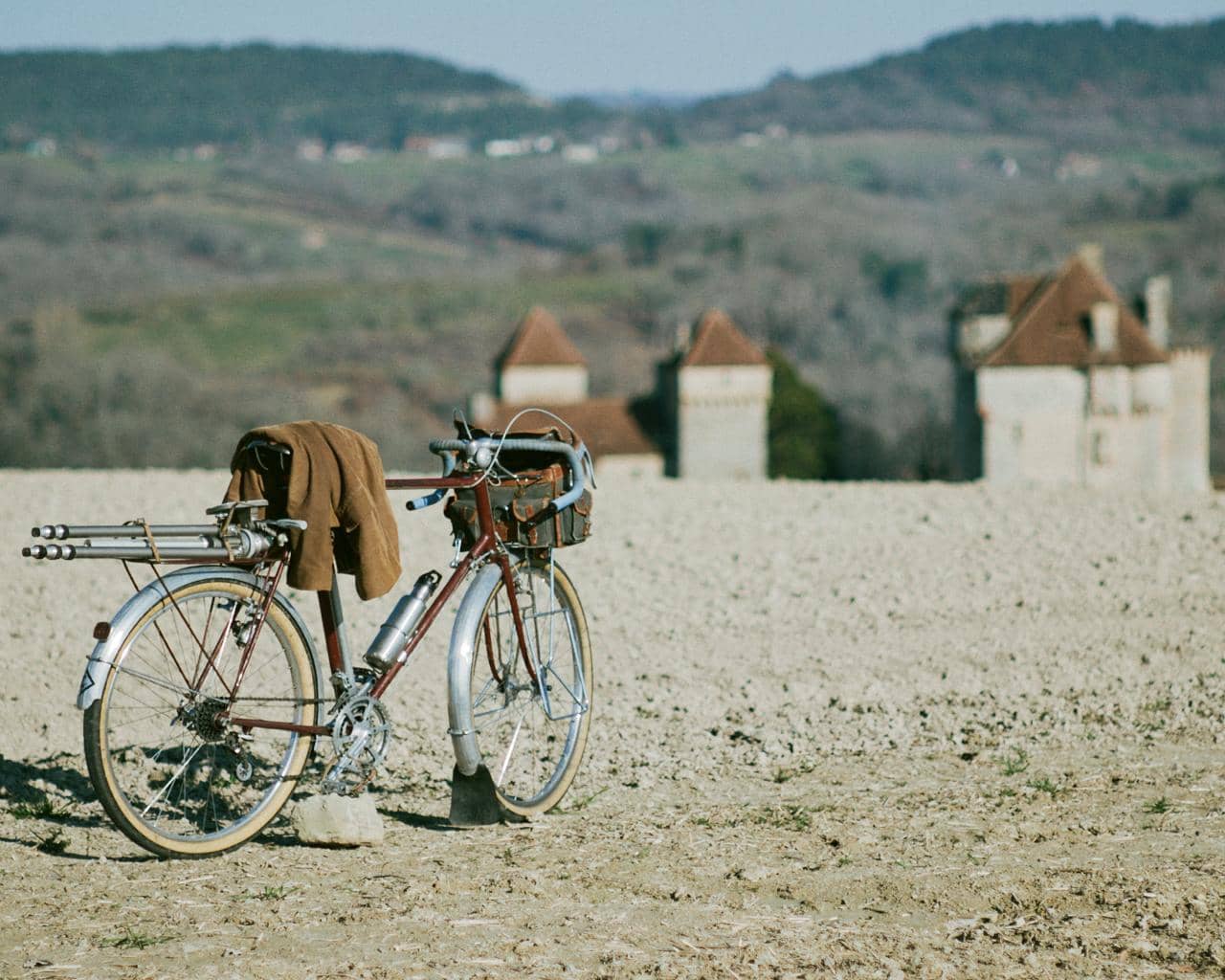
A bicycle stands in a field. Not leaning, not fallen, but propped with a rock under its rear wheel. The rock is small, a practical afterthought. The frame is deep maroon, the fenders chrome, and a brown jacket hangs from the rear rack beside a rolled sleeping pad. On the handlebars, a leather saddlebag. A water bottle clamped to the frame. The field is freshly tilled, dark soil under bright daylight. In the soft background, a stone chateau with conical turrets.
The photograph is almost too picturesque. The chateau feels like a postcard, the bicycle like a prop. But the rock under the wheel is what holds my attention. It is not part of the composition; it is a piece of field picked up to keep the bike upright. The photograph does not hide it. That is the Easy Realism move: include the makeshift, the uncomposed, the thing that keeps the image from being a perfect scene.
The bicycle is called “the bicycle of the photographer.” It is not just a bicycle; it is the vehicle that carries the camera, the body, the eye. The jacket and sleeping pad suggest distance, nights away. The chateau in the distance suggests arrival somewhere else. But the rock says: this is where we stop, for now. The photograph stops with it.
I am not sure whether the chateau helps or hurts. It provides a destination, but maybe the photograph does not need a destination. Maybe the bicycle alone in the field would be enough. The rock would still be there.