Portrait of Jan Faas - 1984
Portrait of Jan Faas - 1984
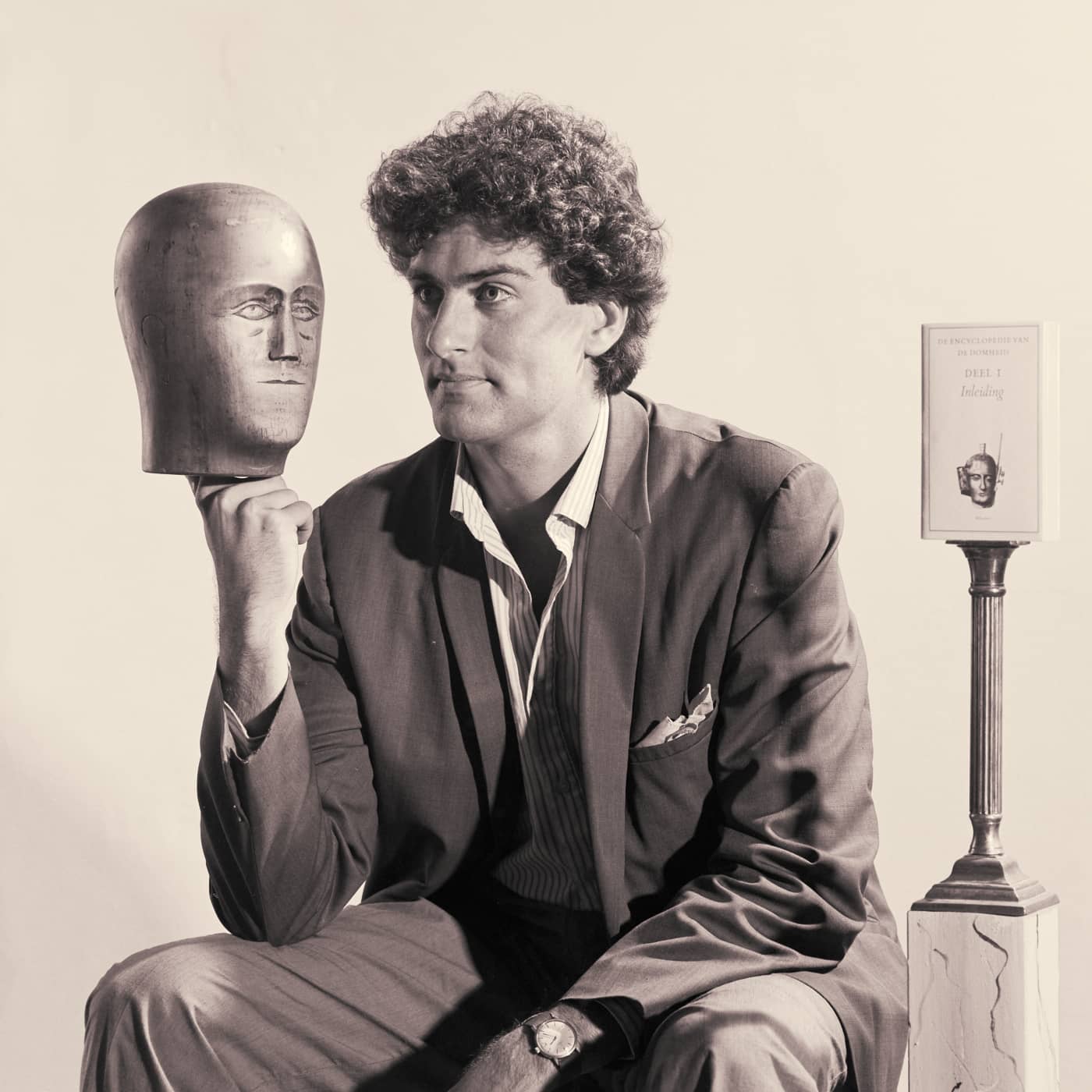
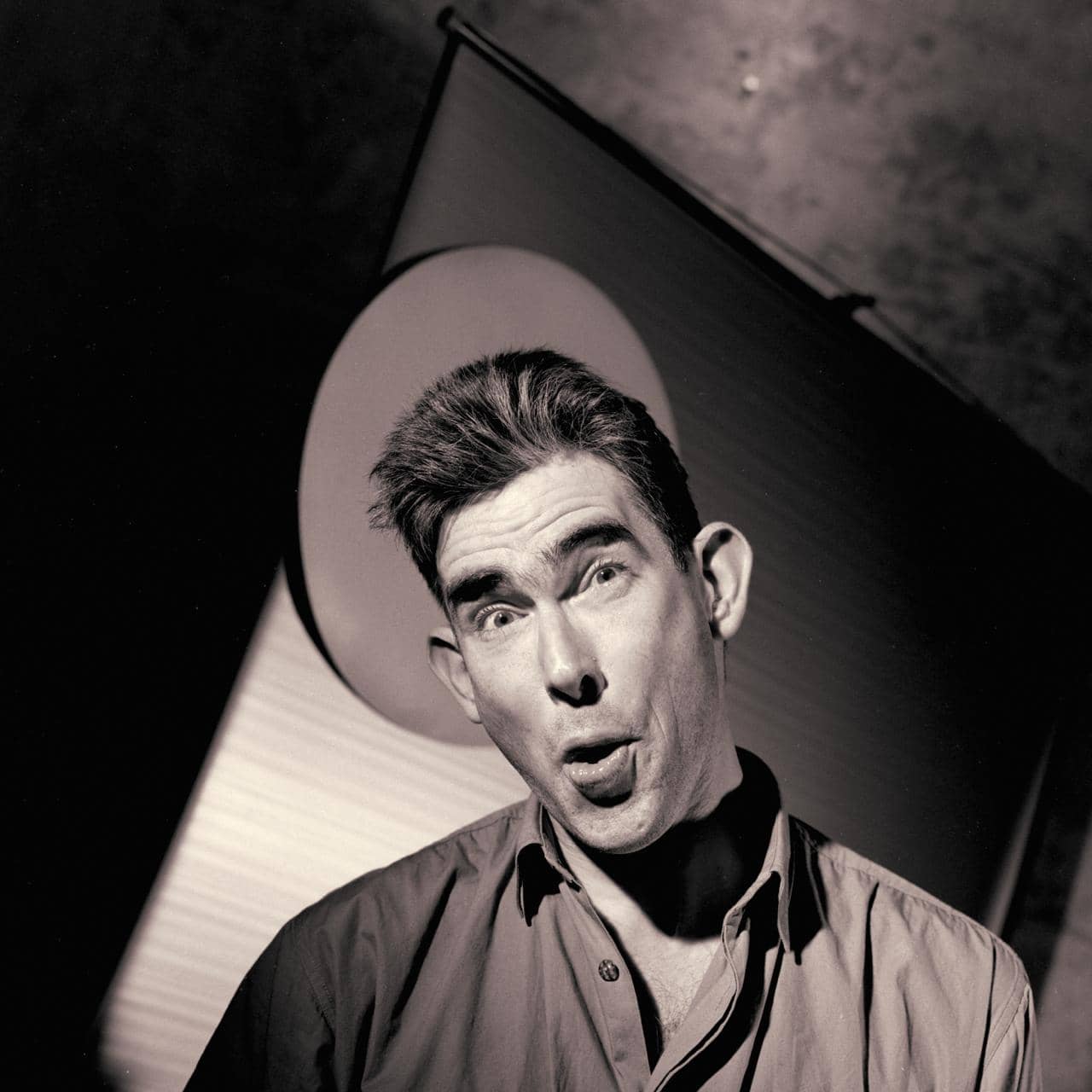
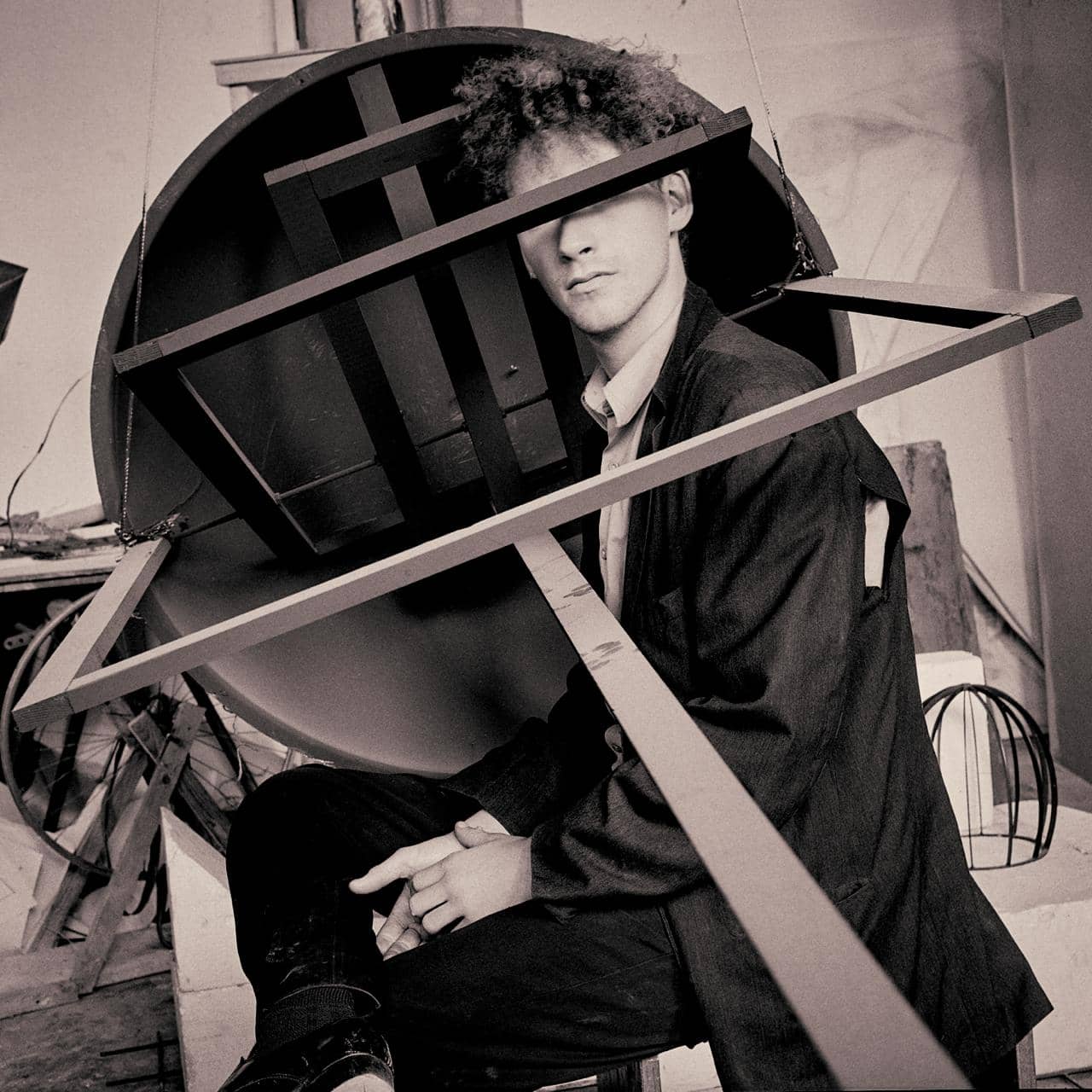
A young man with curly hair looks directly at the camera. He wears a dark jacket over a light collared shirt. A large geometric wooden sculpture—intersecting beams forming a fragmented cross or star—partly obscures his face and torso. Behind him, a massive circular concave structure hangs from chains, like a dish or a shield. The setting feels like a workshop, a studio.
The title says this is Jan Faas. The portrait does not explain who he is. The sculpture in front of him is not a prop; it is an obstacle. It cuts across his body, fragmenting the view. The man’s gaze is calm, steady, but the construction around him is angular, intrusive.
This is 1984, the Rietveld / Bajazzo period. The image is flamboyant, theatrical. The sculpture is bold, almost aggressive in its placement. Yet the man’s expression is quiet, introspective. The tension between the constructed environment and the human subject feels deliberate, but also awkward. I am not sure whether the sculpture enhances the portrait or competes with it.
The circular structure behind him echoes the shape of a halo, a target, a satellite dish. It looms, suspended. The chains suggest something temporary, something that could be taken down. The portrait is both staged and provisional. That may be its strength: it admits its own artifice.
I keep looking at the way the wooden beams slice across the man’s chest. They do not hide him; they frame him within a geometry. He is not trapped, but he is not free either. The photograph does not resolve the relation between person and object. It leaves them in uneasy coexistence. That feels true to the period’s spirit: pose as performance, identity as construction.
The risk is that the image becomes merely a stylish composition. But the man’s direct gaze holds it. He is not a model; he is a presence. The photograph remembers that, even as it builds a stage around him.