Cordonnerie - 2025
Cordonnerie - 2025
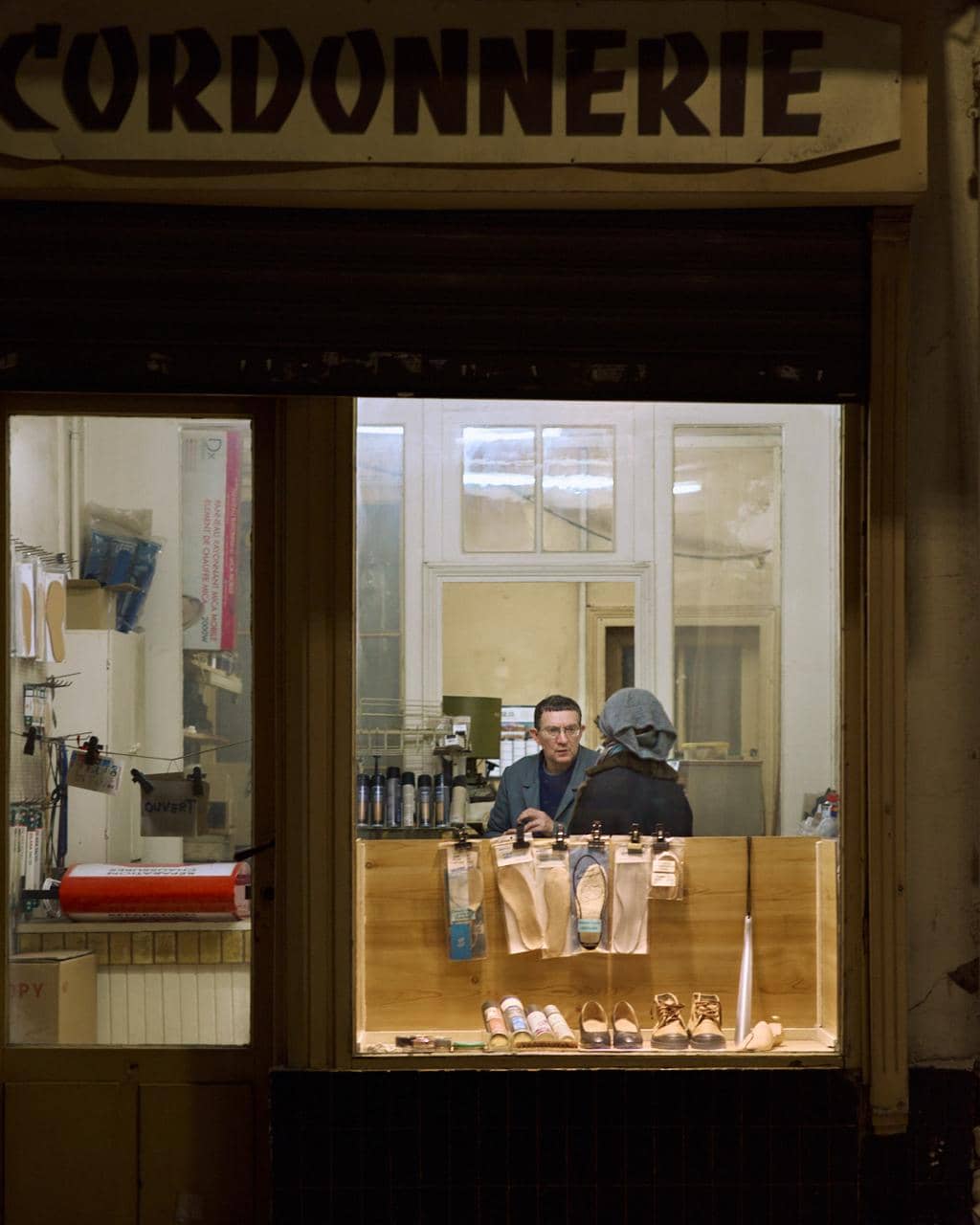
Through a large shop window at night, warm light spills onto the street. Inside, a cobbler with glasses sits behind a wooden counter. He is talking to a customer—a woman in a dark coat and a light blue headscarf, her back turned. The counter holds shoe care products, insoles, several pairs of shoes. Shelves behind him are stacked with spray cans and tools. A sign says “OUVERT.”
The title is simply “Cordonnerie.” The year is 2025. The photograph does not romanticize the scene; it observes from the outside, through glass. The window reflects the street, but we see past the reflection into the lit interior. The composition feels both intimate and distant. We are passers‑by, looking in.
This is Easy Realism: the reality of a small repair shop, still open after dark. The cobbler’s trade is practical, unglamorous. The customer is mid‑conversation. Nothing is staged; the moment is ordinary. Yet the framing—the window, the night, the warm glow—turns the ordinary into a quiet tableau. I am not sure whether the photograph celebrates the everyday or simply records it. Both, perhaps.
What holds me is the woman’s turned back. We do not see her face; we see her presence. The cobbler faces her, engaged. The dialogue is invisible, but the posture speaks. The image trusts that this small exchange is enough. In 2025, with automation and digital distance, a shoe repair shop feels almost anachronistic. The photograph does not comment on that; it shows the shop still there, still open. That may be comment enough.