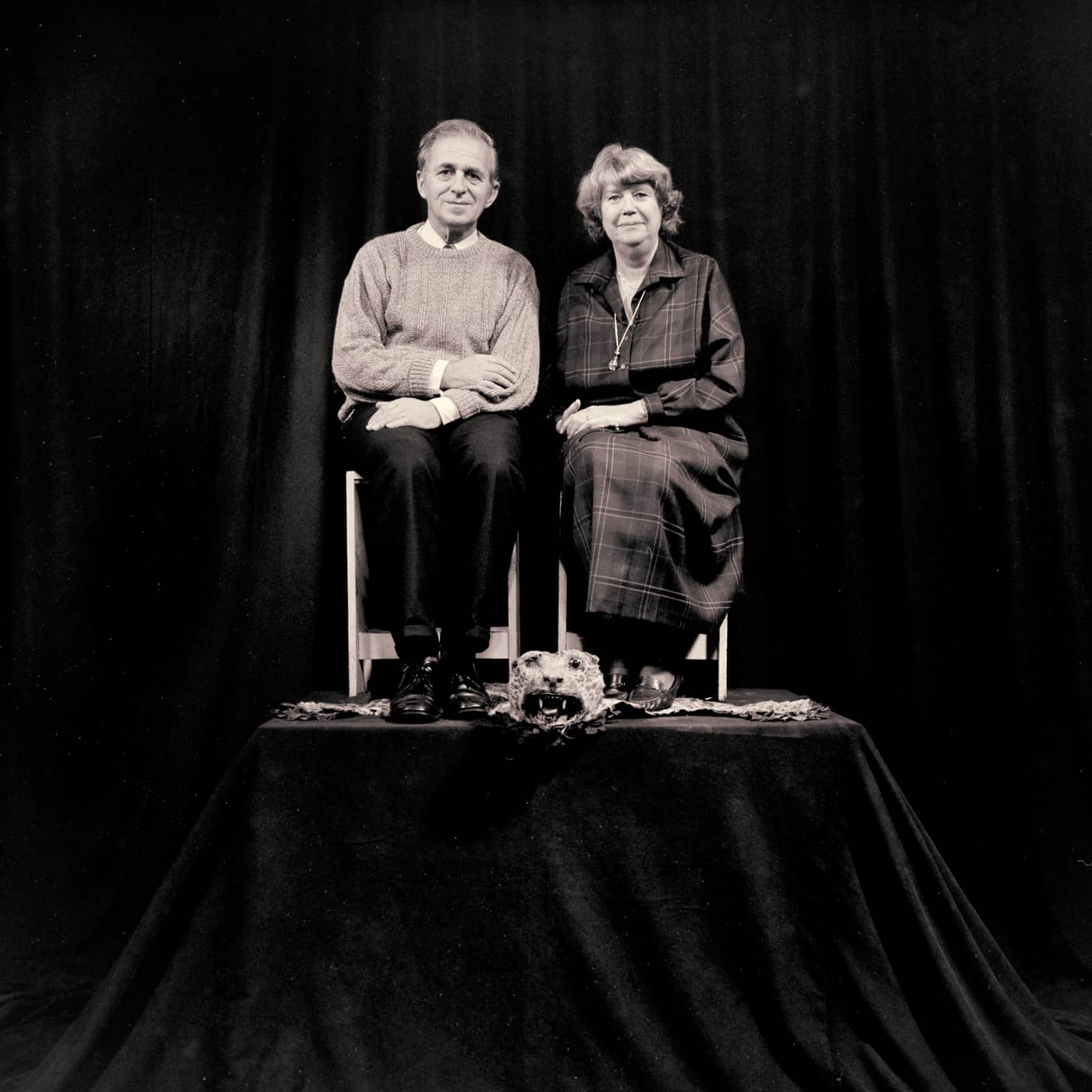
The parents of Pjotr de Jong - 1987
The parents of Pjotr de Jong - 1987
A man and a woman sit side by side on simple wooden chairs, placed on a raised platform draped with a dark cloth. Behind them, a smooth dark curtain. They look straight at the camera, hands folded in their laps. He wears a patterned knit sweater over a collared shirt; she wears a dark checked dress with a necklace. Between their feet, on the podium, lies an object: an animal head, mouth open, teeth visible, resting on a piece of fabric with a rough, possibly fur-like edge.
The title identifies them as the parents of Pjotr de Jong. But the photograph doesn’t explain the animal head. It sits there like a prop that has wandered into a formal portrait. The couple’s posture is stiff, almost ceremonial. The platform elevates them, but the animal head drags the scene down into something stranger, more primal.
This is from the Bajazzo years, when theatricality and staged scenes were central. Here the staging is deliberate but cryptic. The couple’s gaze is direct, unflinching, while the animal head looks away, jaws agape. The contrast between the composed human figures and the severed animal head creates a tension that the photograph doesn’t resolve.
It feels like a portrait that refuses to be just a portrait. The parents are posed, but the animal head introduces an element of the grotesque, the uncanny. The photograph doesn’t tell us what it means. It just presents the pairing: dignity and decay, sitting together on the same dark cloth.