Autumn in Paris - 2022
Autumn in Paris - 2022
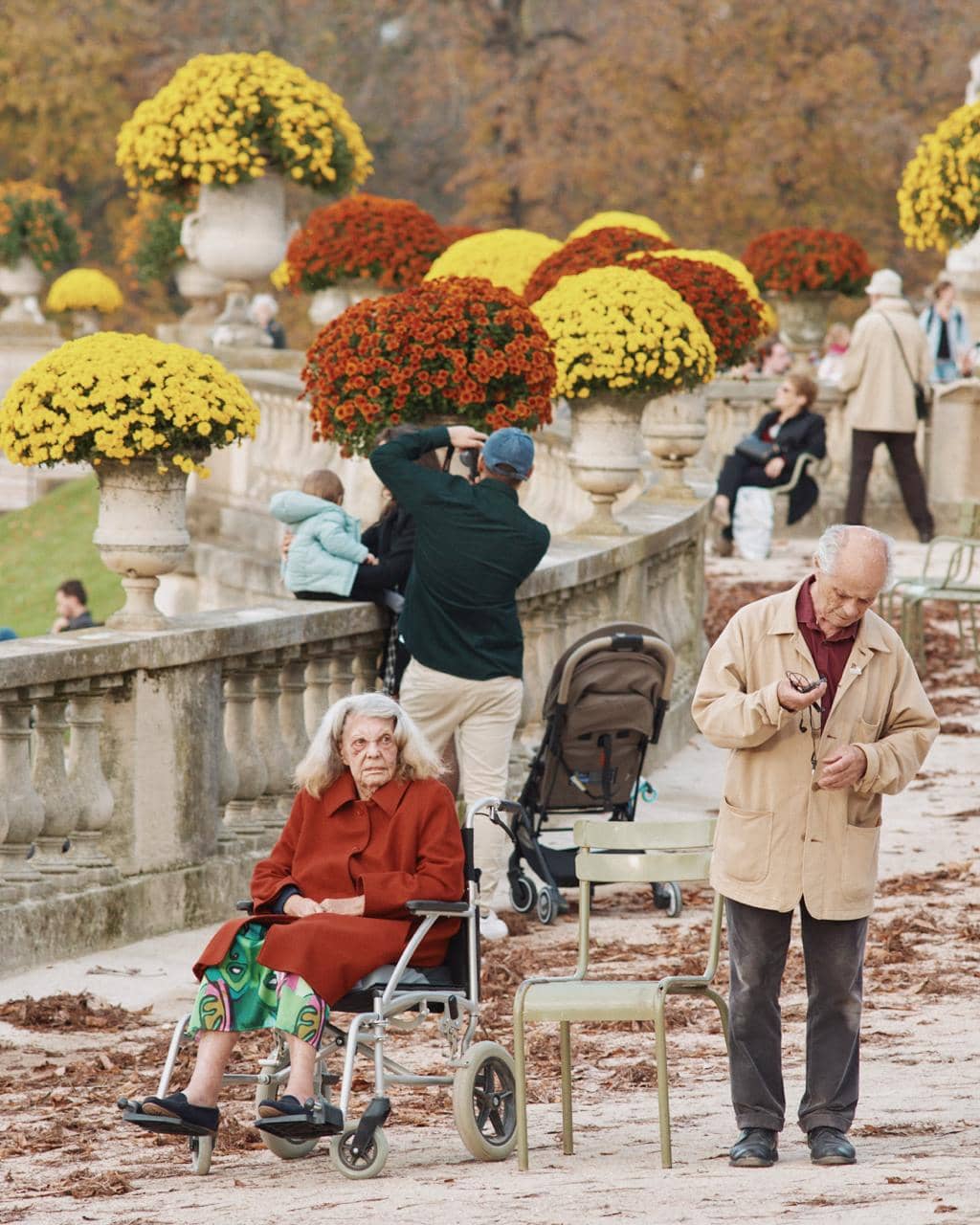
Yellow and orange mums spill from stone urns along a balustrade. In the foreground, an elderly woman in a rust‑red coat sits in a wheelchair, gazing ahead. Beside her, an older man looks down at his hands, holding glasses. A green metal chair stands empty. Behind them, a man in a green shirt and blue cap is taking a photograph of something else. The scene is autumn in a Paris park.
The title says “Autumn in Paris.” The photograph does not dispute the cliché, but fills it with specific, quiet lives. The woman’s wheelchair, the man’s lowered gaze, the empty chair—they are not picturesque. They are simply there, amid the vibrant flowers. The man photographing in the background adds a layer: we are watching someone else capture the same season, perhaps the same beauty. The image is aware of its own act of looking.
This is Easy Realism in 2022. The reality is not polished; the wheelchair is not hidden, the age is not softened. Yet the composition feels gentle, almost tender. I am not sure whether the tenderness is earned or sentimental. The flowers are so bright, the coats so colourful, that the scene risks postcard prettiness. But the woman’s distant gaze holds it back. She is not performing autumn; she is living in it.
What holds me is the empty green chair. It is a placeholder, a possibility. Someone could sit there, but no one does. The man beside the woman is not sitting; he is standing, looking down. The chair waits. That small detail turns the image from a snapshot into a quiet story. The photograph does not explain the story; it leaves the chair empty, and the viewer fills it.