The Dive - 1988
The Dive - 1988
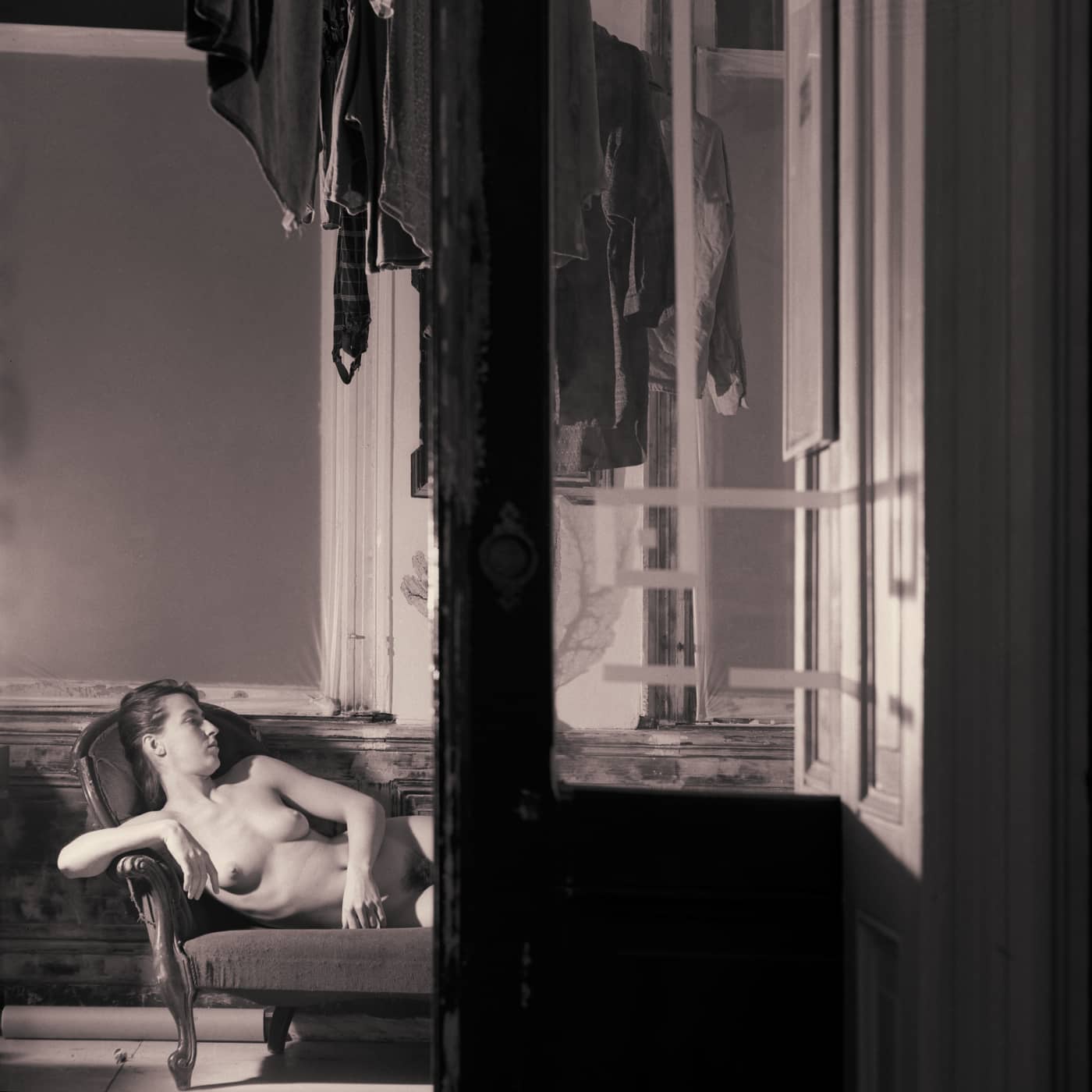
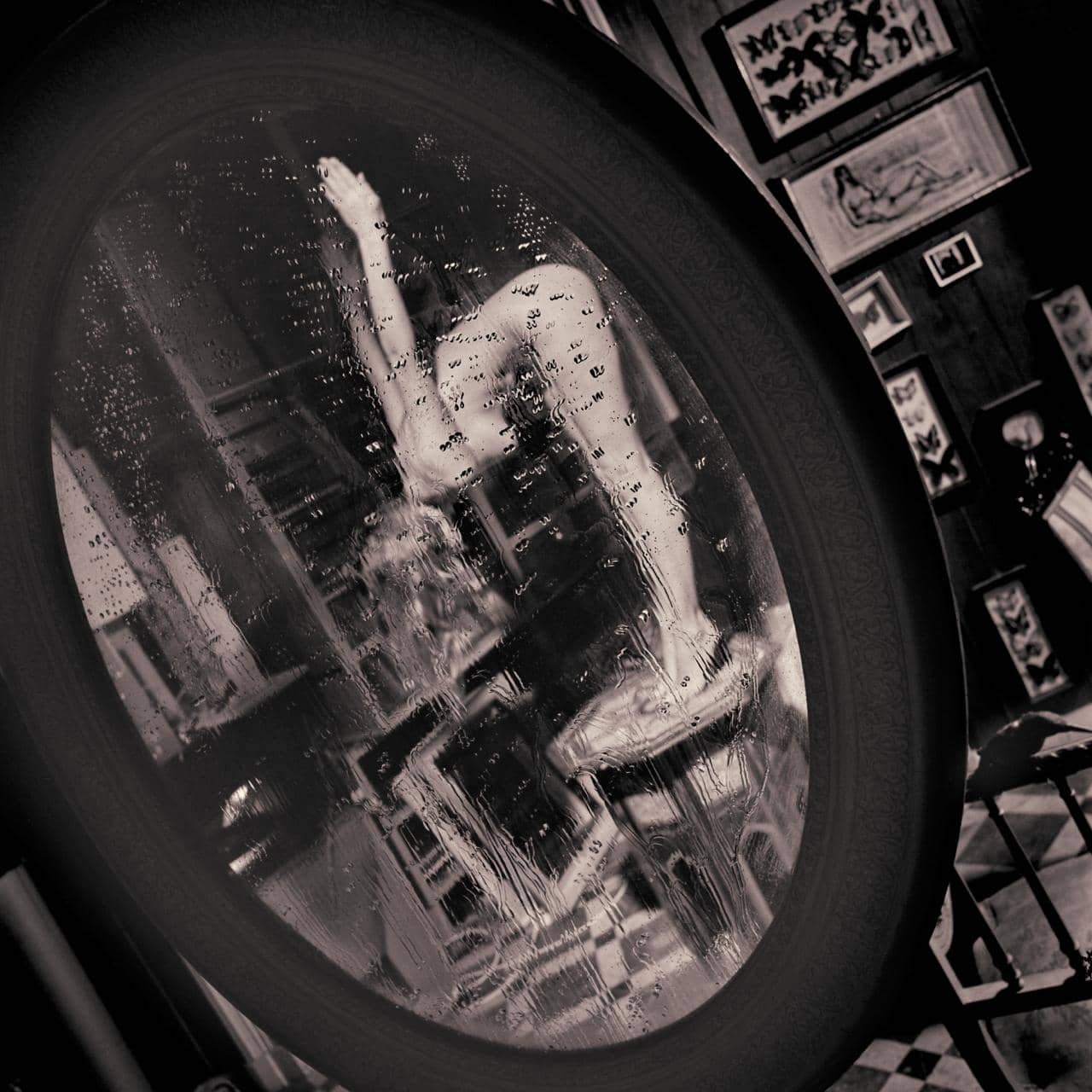
The water on the mirror is not clean. It beads and streaks, turning the glass into a wet membrane. Behind it, a room floats: shelves, frames, a nude figure caught mid-reach. The reflection is not a window but a barrier. You see the room through the distortion, not through the glass.
The mirror’s ornate frame holds the centre. Dark, patterned, it presses against the picture plane like a proscenium. The water dots act as lenses, each bending a tiny piece of the scene behind. Some droplets magnify a patch of skin, others blur a corner of a frame. The glass is both surface and depth.
This feels like a stage set that has been left out in the rain. The nude figure is performing, but the performance is being dissolved by the water. The arm reaches up, but the gesture is fractured by streaks. The room behind is cluttered with art, but the water makes it look submerged.
I am not sure whether the water is accidental or staged. That uncertainty is the photograph’s engine. If the water is real, the image documents a moment of seepage. If it is applied, the image becomes a constructed metaphor. The photograph refuses to tell me which it is.
The title, “The Dive,” points downward, but the figure reaches up. The mirror is static, but the water moves. Nothing here aligns neatly. That misalignment is where the picture lives.
The 1988 date places this in the La Photographie Égoïste period. The self-aware theatricality, the staged interior, the blurring of document and performance: all fit. Yet the water adds something raw, almost careless. It saves the image from being merely a clever tableau. The water is the mistake that makes the picture true.