There's more to the picture than meets the eye - 2021
There's more to the picture than meets the eye - 2021
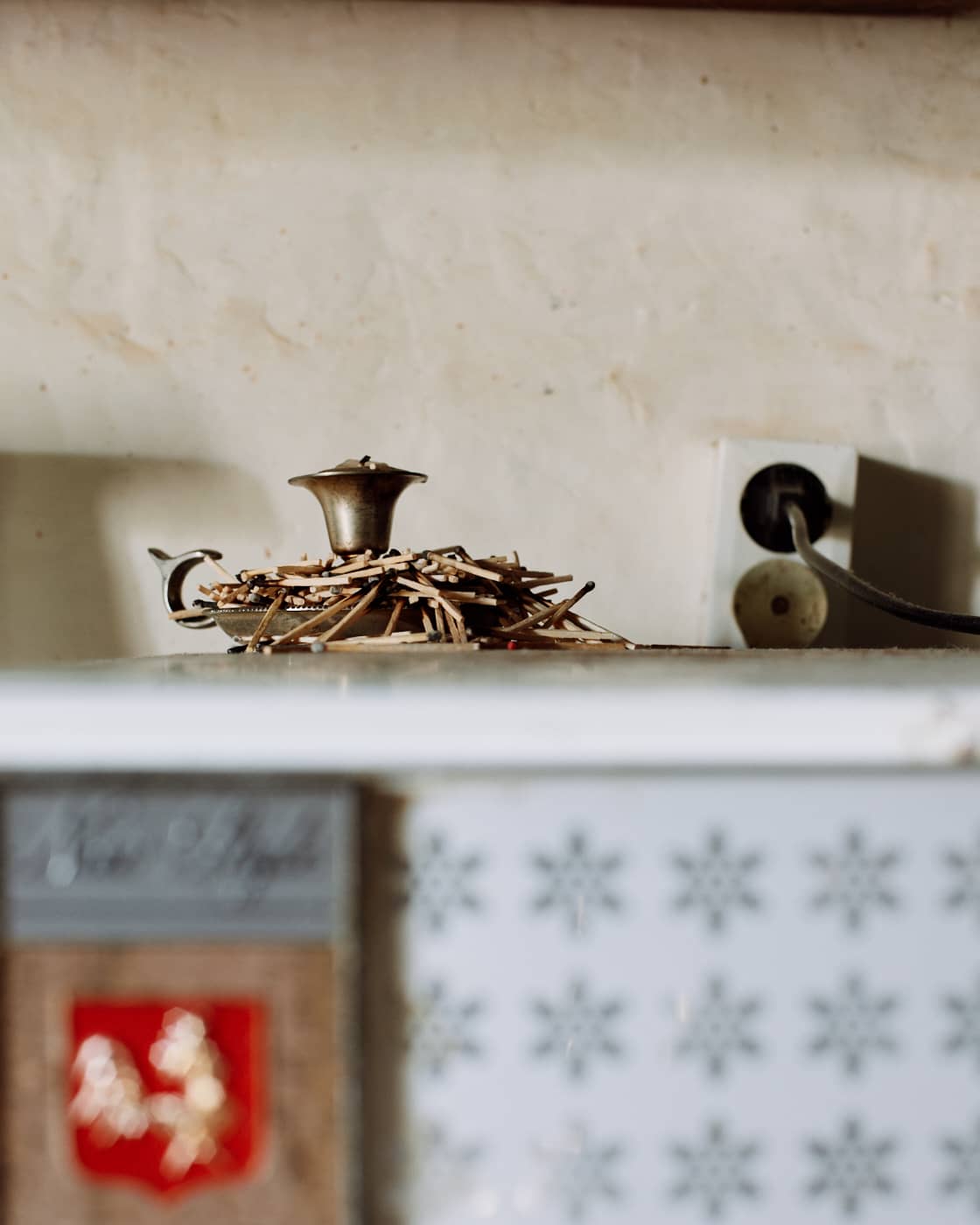
The matches spill over the rim of a small, tarnished brass holder. Their blackened tips point in all directions, a few with red residue. To the right, a white electrical outlet holds a black plug, its cord descending out of frame. The wall is textured, off-white, with faint stains.
The focus is shallow, holding the matches sharp while the outlet softens and the boxes below blur into patterned abstraction. Light falls from the upper left, casting soft shadows that cling to each stick. This is a photograph of accumulation, but also of adjacency: fire and electricity, the spent match and the live plug.
I don’t trust the title. “There’s more to the picture than meets the eye” feels like a clue, maybe a pun about matches and sight, but the image doesn’t need it. The visual tension between the two energy sources—one exhausted, the other connected but idle—is already enough. The outlet is passive, the matches are dead; both are waiting.
What works is the quiet insistence on these small, used things. The composition refuses drama, lets the matches be a pile, not a symbol. Yet the shallow depth forces us to look past the outlet, to the blurred boxes below, as if something else is hiding. That hint feels unnecessary. The photograph is stronger when it simply shows what is there: a holder full of burnt matches, a plug in a socket, a wall that has seen both.