Love is the cure - 2018
Love is the cure - 2018
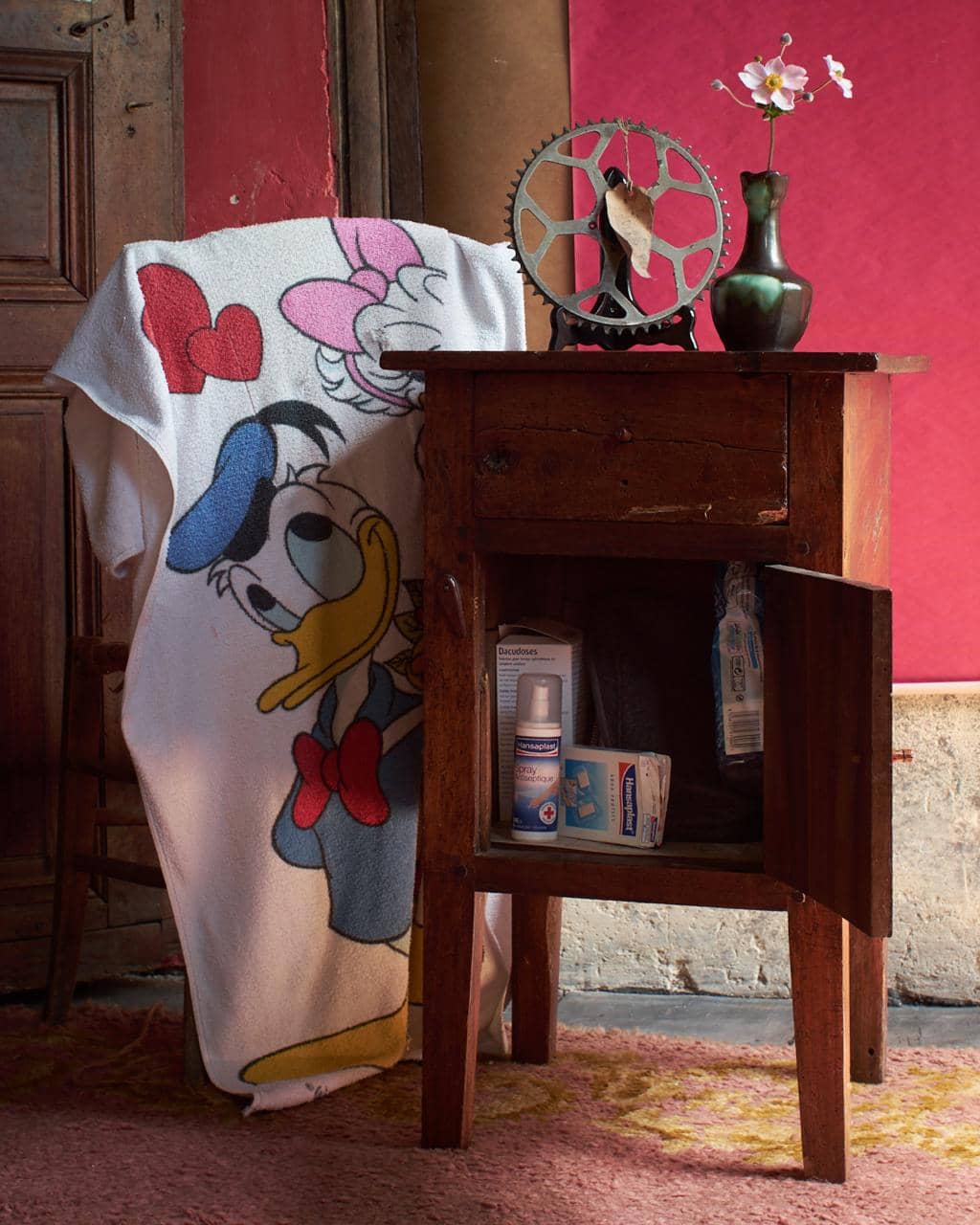
A magenta wall, deep as a bruise. An open cabinet door shows antiseptic spray and bandage boxes. On top sits a dark green vase with two pink flowers, beside a heavy metal gear on a stand. Draped over a chair, a white towel printed with Donald Duck and Daisy Duck, two red hearts floating above them.
The towel is too cheerful. It feels like a child’s blanket thrown over the scene to make it safe. The gear is a piece of machinery, all teeth and weight. Neither belongs here, but both are placed as if they do. The photograph’s central tension is between the cartoon comfort and the medical supplies waiting in the shadow of the cabinet. The title, “Love is the cure,” pushes that tension into a statement. I am not sure I believe it.
The lighting is harsh, coming from the left, carving the wood and the towel’s folds. It makes the gear look like a weapon, the flowers like an afterthought. This is 2018, deep into Easy Realism, but the image feels staged in a way that Easy Realism usually refuses. The elements are too pointed: the cure, the love, the machine, the wound. The photograph wants to be a parable, but the towel’s fluffiness undermines the gravity.
What works is the cabinet door left ajar. It suggests someone just reached in, or is about to. That small human hesitation is more convincing than the whole allegory.