Nude at home - 1987
Nude at home - 1987
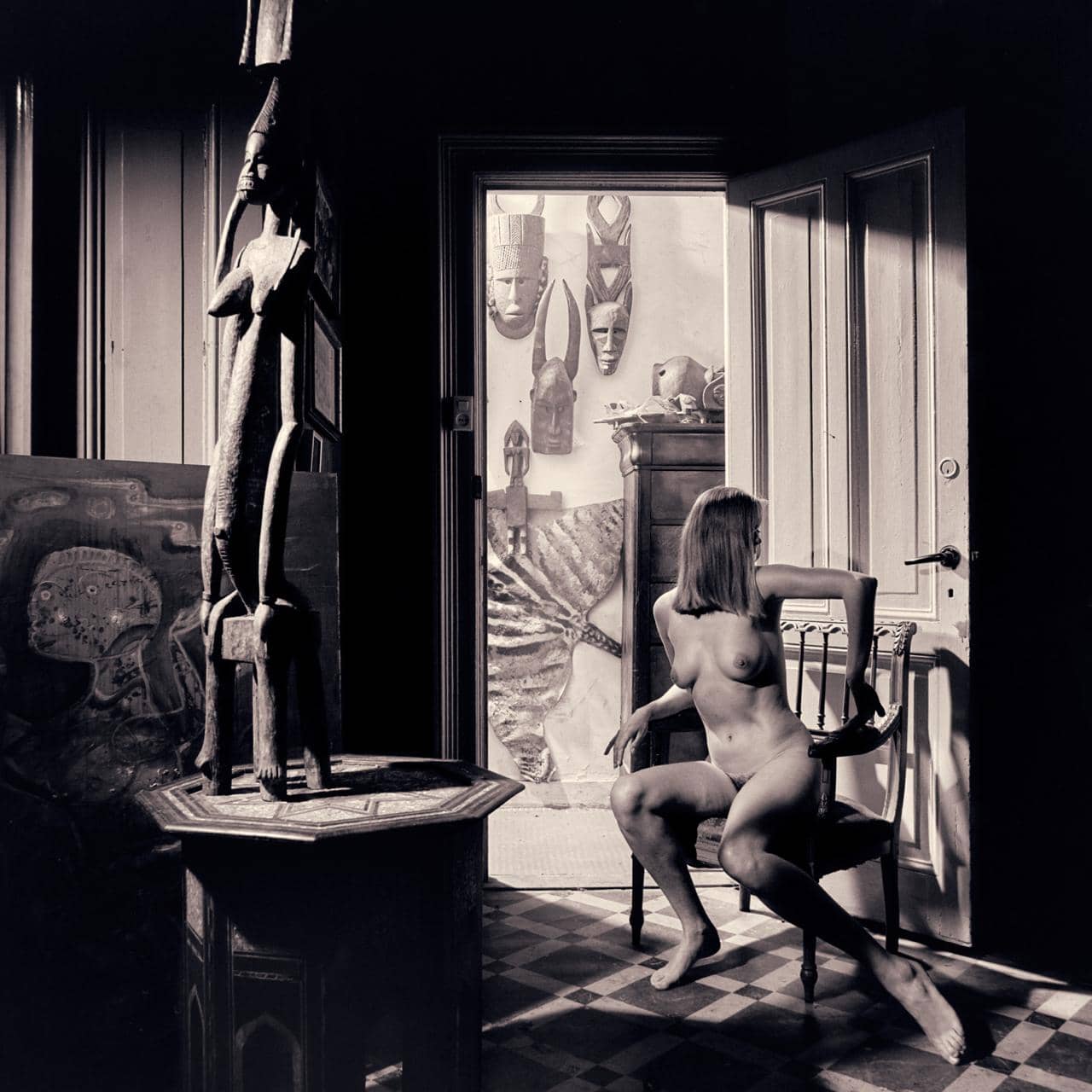
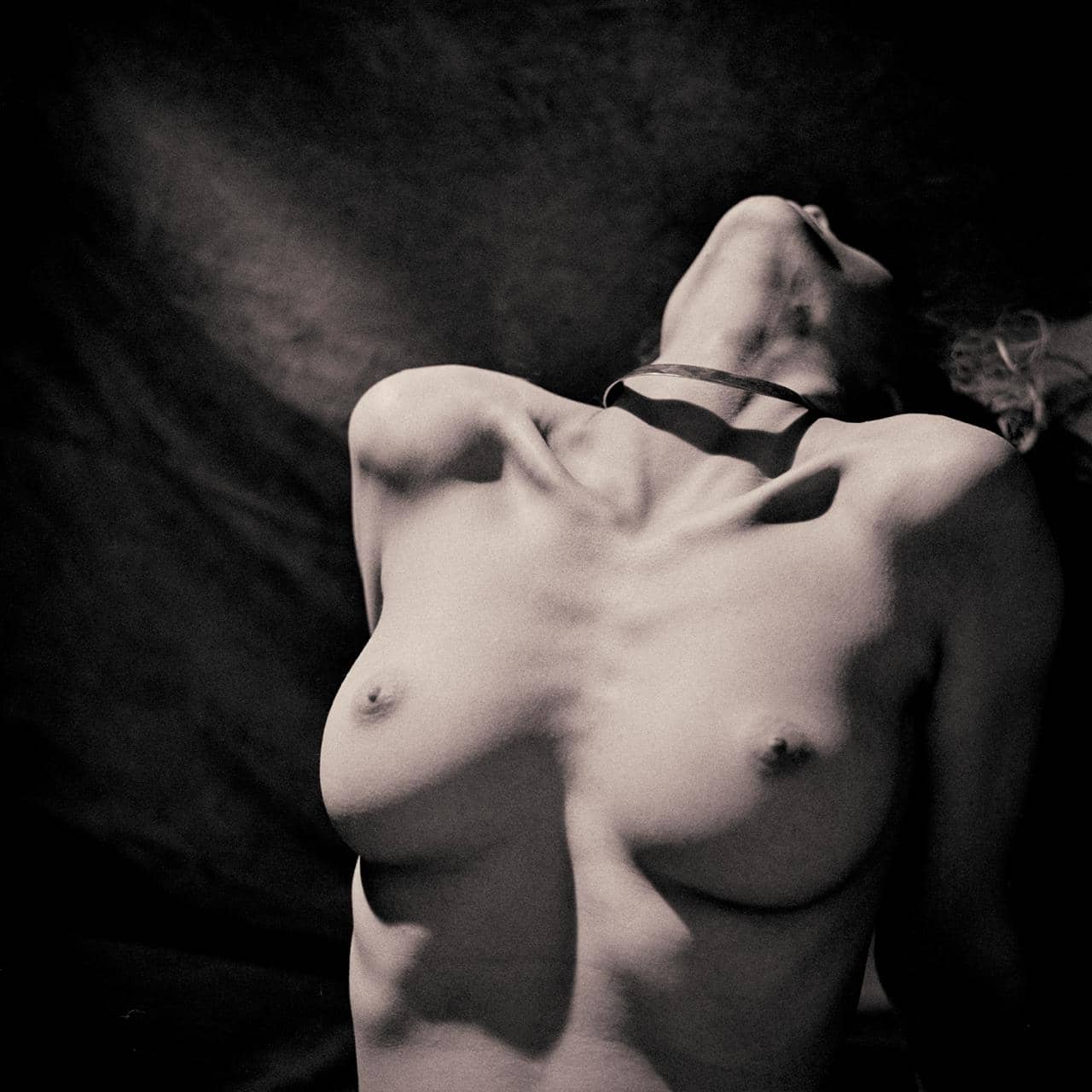
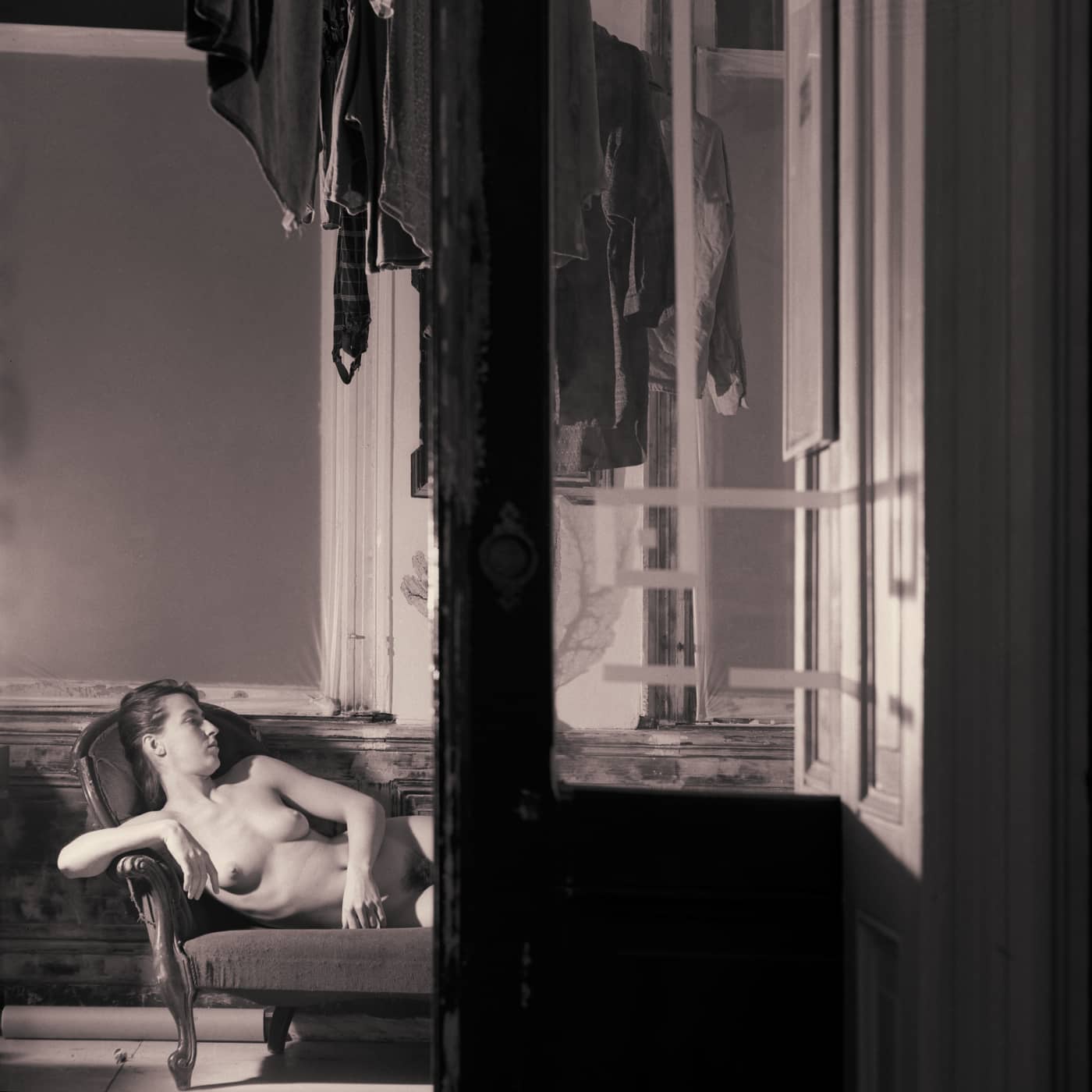
A woman lies naked on a wooden‑armed armchair, her head against the backrest, her gaze turned away. She is on her left side, one arm resting on the chair’s arm, the other along her body. Above her, clothes hang from a line: a dark piece of fabric, a checked one. Light falls through a window or door on the right, casting shadows on the pale wall and floor.
The title says ‘at home’, and the setting feels domestic: the chair, the hanging laundry, the ordinary doorframe. But the nudity isn’t posed for display; it’s casual, almost incidental. She isn’t looking at us. Her body is turned, partly hidden by the chair’s arm and the dark vertical post on the right that cuts into the frame. The composition feels cramped, as if the camera couldn’t step back.
This is from the Bajazzo years, when theatricality and staged scenes were common. Here, though, the staging feels awkward, constrained. The hanging clothes add a note of everyday life, but they also clutter the space. The light from the window is soft, but it doesn’t idealize; it just illuminates a room with too much furniture.
What works is the refusal to make the nude glamorous or symbolic. She’s just there, in a chair, with laundry overhead. The photograph doesn’t try to rescue the scene. It lets the ordinary remain ordinary, which in 1987 might have been a quiet rebellion against the period’s flamboyance.