Claiming an Empty Seat nr.2
Claiming an Empty Seat nr.2
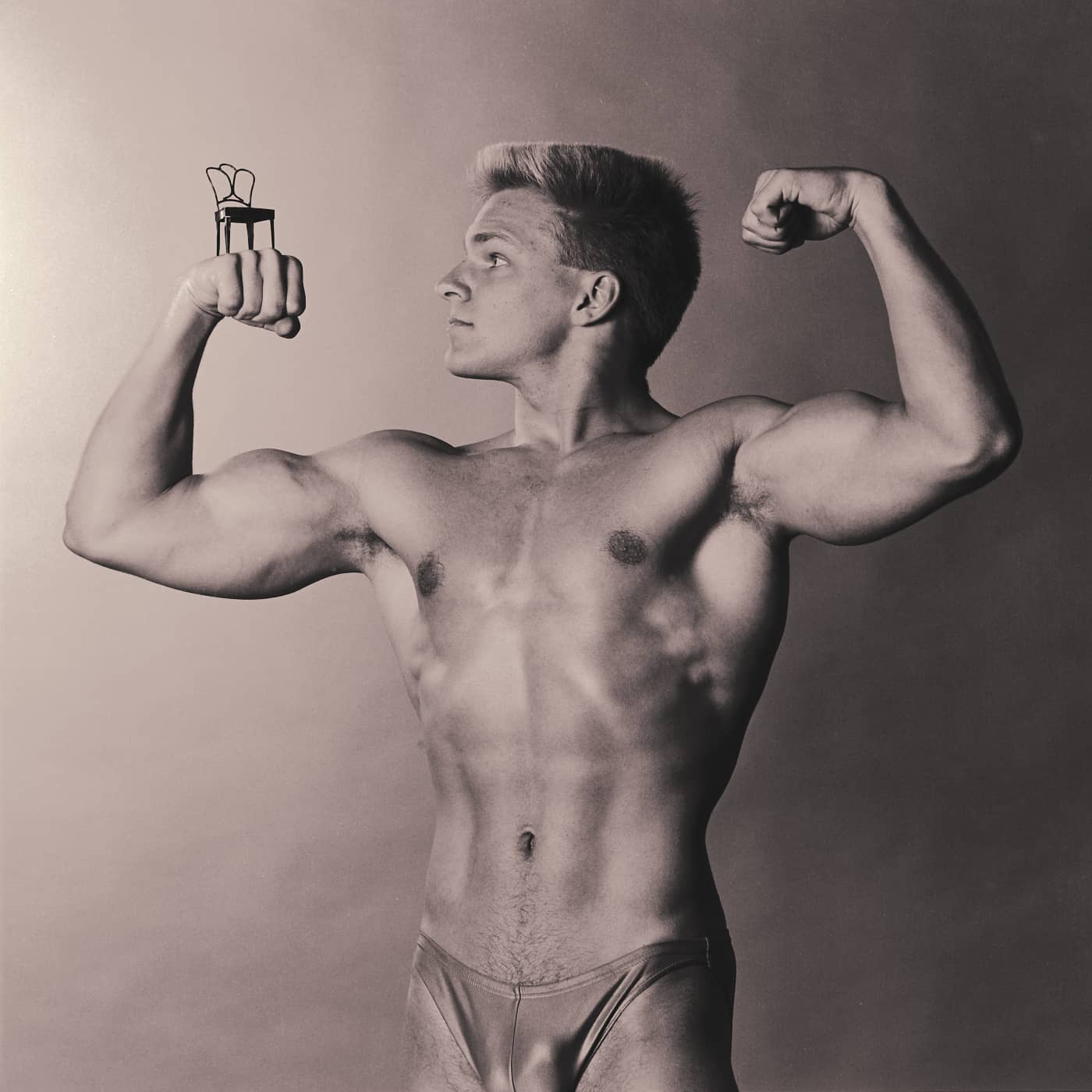
A shirtless man holds a miniature chair in his right hand. He looks at it over his left shoulder, arms raised, biceps flexed. He wears shiny low-rise briefs. The background is a plain gradient, lighter on the left. The image has a warm, sepia-toned monochrome. Lighting from front-left casts soft shadows on his right side.
The title repeats “Claiming an Empty Seat,” but here the seat is miniature, a toy. The man’s pose is theatrical—flexed arms, turned head, a bodybuilder’s stance. He examines the small chair as if it were a trophy or a puzzle. His expression is neutral, focused.
This second version feels more overtly performative than the first. Where the previous image showed strain, this one shows display. The miniature chair becomes a prop in a pose about strength and observation. The shiny briefs, the muscular definition, the careful lighting: everything emphasizes presentation.
I distrust the shift. The first photograph had physical tension—a man bending under the weight of a real chair. This one replaces effort with attitude. The miniature chair is too easy a symbol. It reduces the idea of “claiming” to a gesture, a flex. The man looks at the chair as if assessing its symbolic value, not its weight.
Yet the photograph works precisely because it acknowledges its own theatricality. It does not pretend to be raw. The gradient background, the posed body, the tiny chair: this is a studio construction about construction. The claim here is not for a seat but for an image. The emptiness belongs to the frame, not the furniture.