My Life as William Eggleston. - 2025
My Life as William Eggleston. - 2025
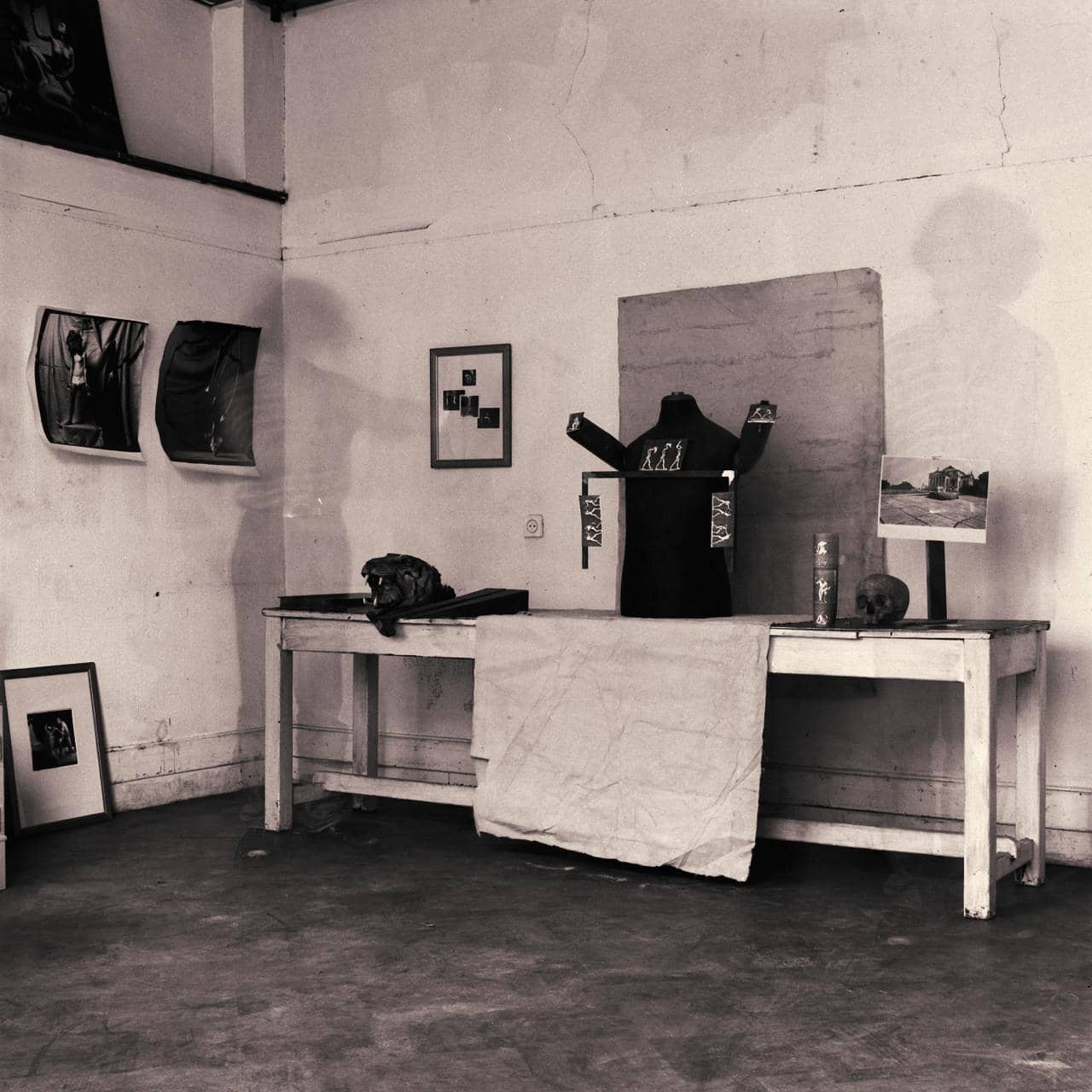
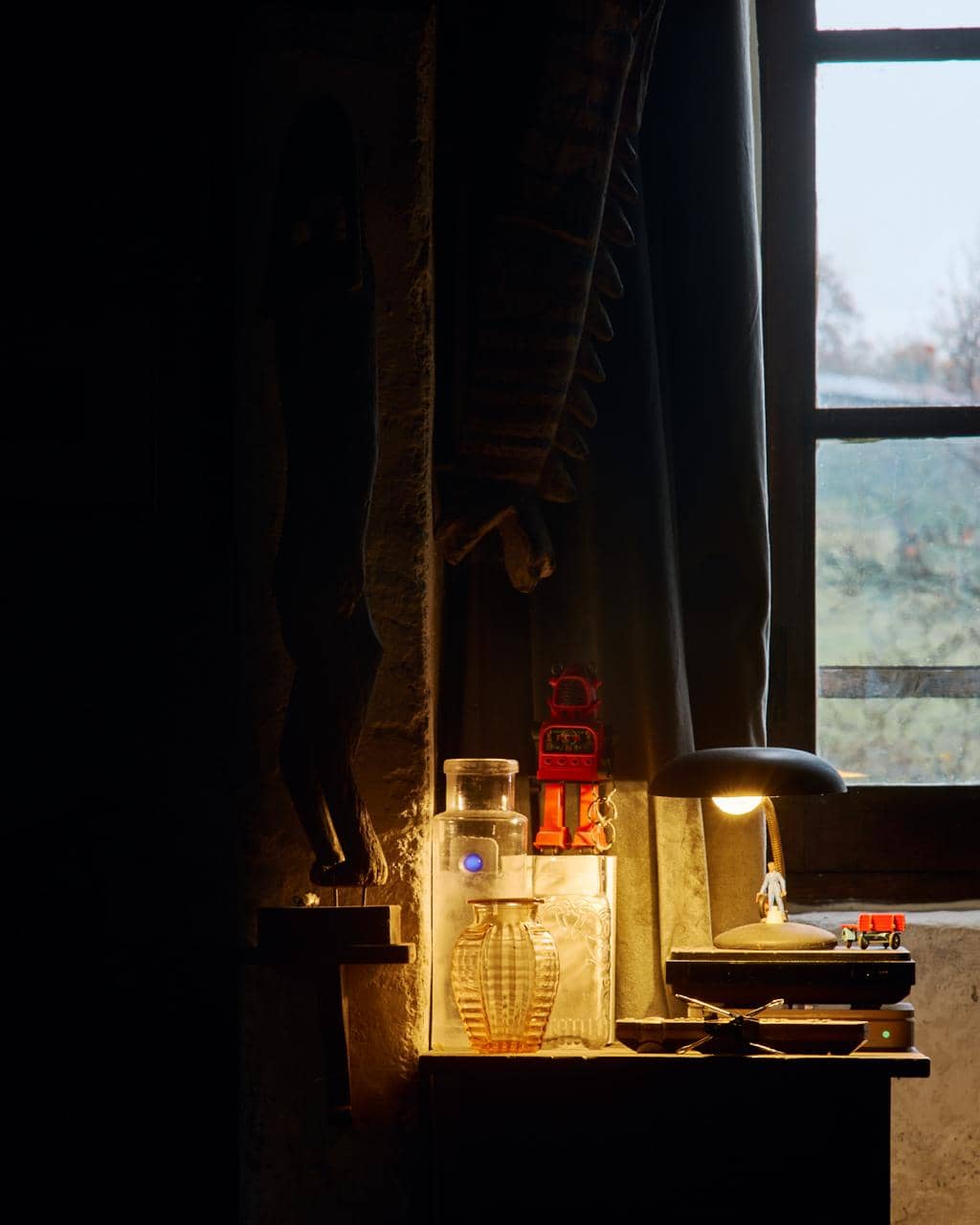
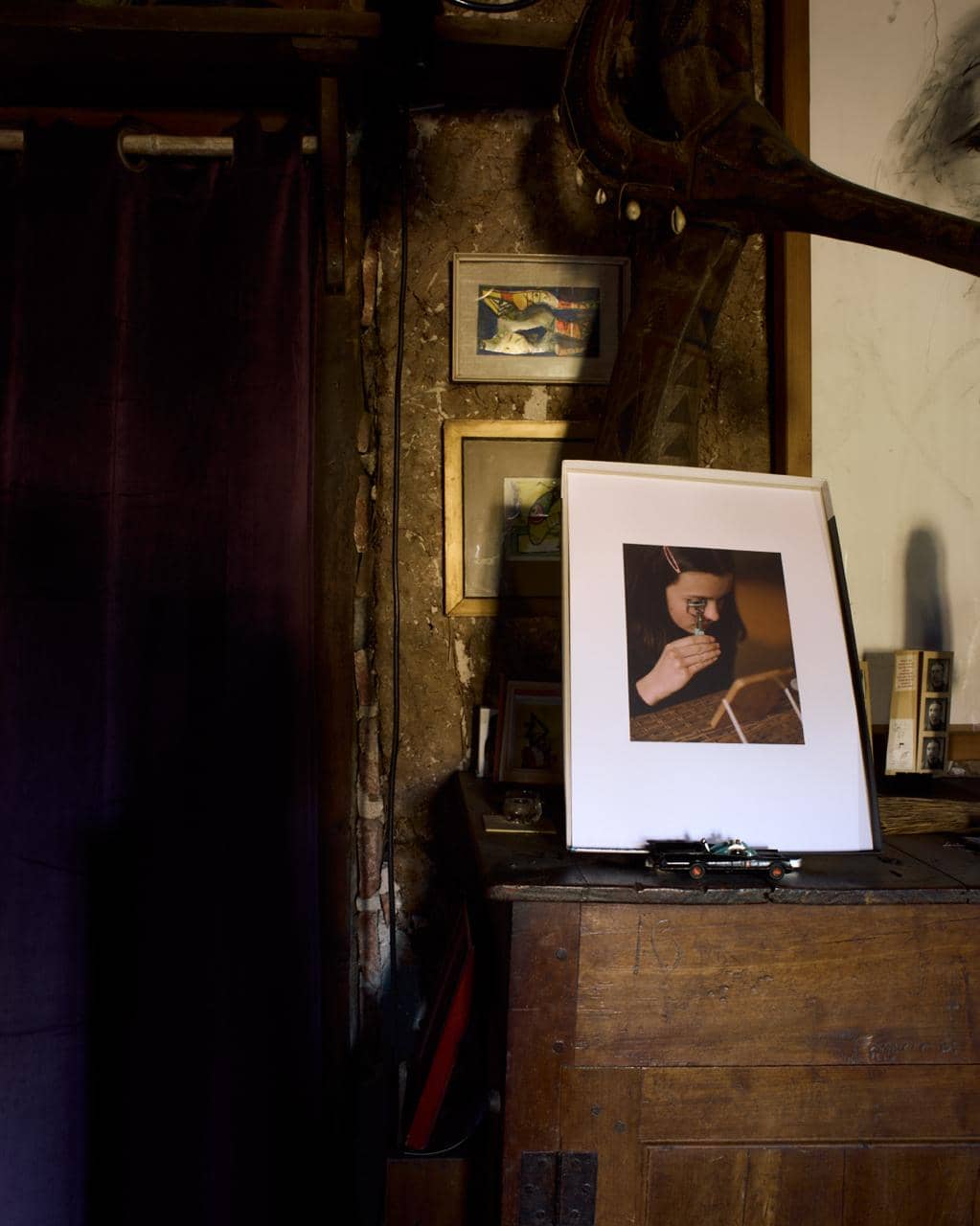
A rustic wooden cabinet against a textured, aged wall. On top, a large white‑matted photograph of a young girl looking intently through a magnifying glass. In front, a small black toy car. Behind, two smaller framed artworks hang askew. To the left, a heavy dark purple curtain casts deep shadows. To the right, a large, dark sculptural object, possibly a carved mask, looms partially out of frame.
The title claims: “My Life as William Eggleston.” Eggleston is the American photographer who made the mundane poetic, who elevated colour photography to art. This image is not colourful; it is dim, moody, cluttered with objects that feel symbolic rather than everyday. The girl with the magnifying glass suggests scrutiny, perhaps of photography itself. The toy car might be an Eggleston reference—he famously photographed cars—but here it is a miniature, a toy.
What holds the image together is the tension between homage and departure. The photograph mimics Eggleston’s democratic eye only to stage a tableau that is anything but democratic. Each object feels placed, weighted with meaning. The curtain, the mask, the askew frames: this is not the American South; it is a private museum of influences.
I distrust the ease of the reference. Eggleston’s genius was his ability to find the extraordinary in the ordinary. This image does the opposite: it makes the ordinary look extraordinary, which is easier. Yet the gloom is compelling, the composition dense with shadows. The photograph may not be Eggleston, but it is something else: a meditation on influence, on how one photographer’s life becomes another’s interior decoration.
The title is a joke, or a confession. Either way, it admits that the life is not lived but arranged.