Atelier - 1989
Atelier - 1989
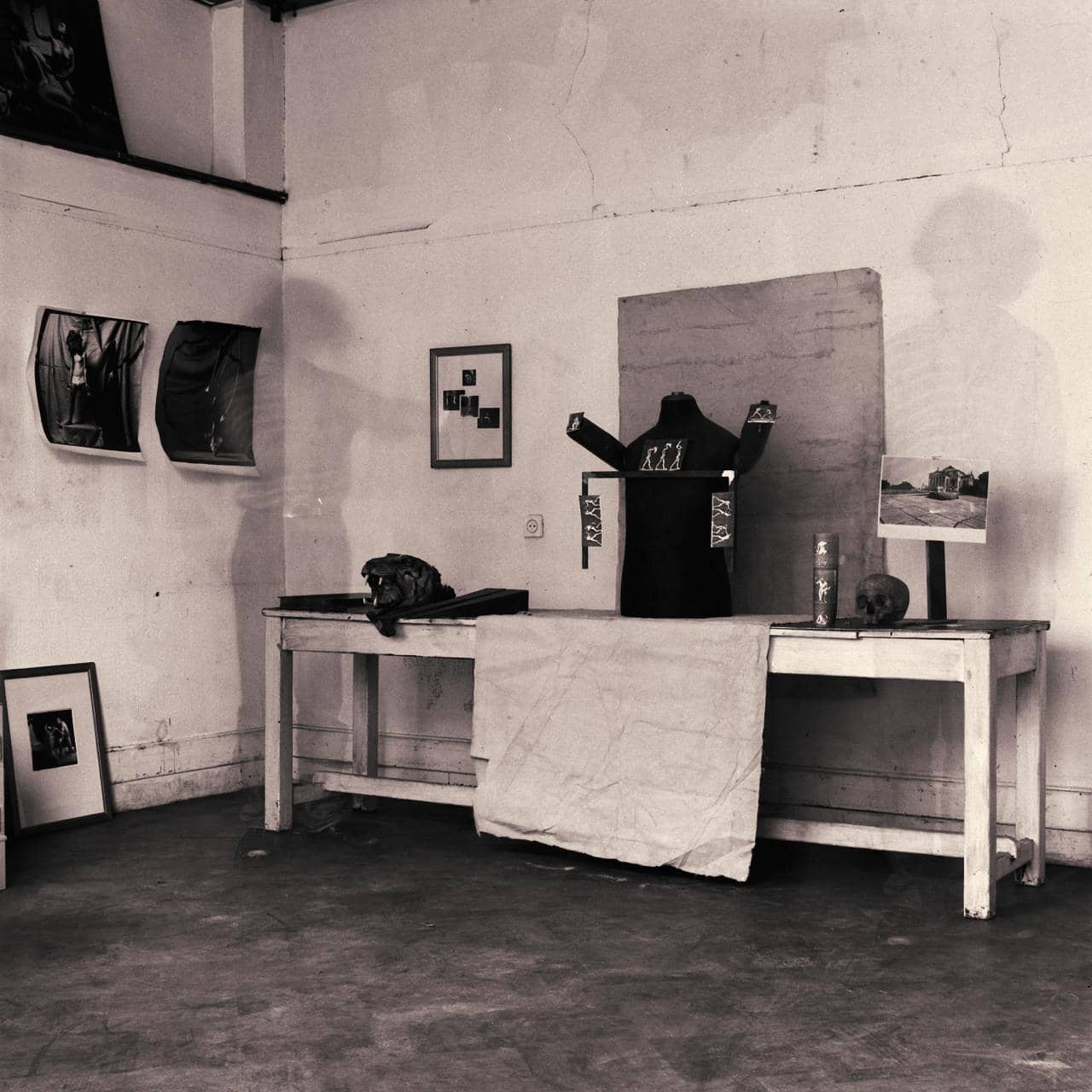
Concrete floor, plain walls, a long table draped in wrinkled cloth. On the cloth, a dark mannequin torso with arms outstretched, its surface dotted with small, repeating figures. To the left, a lumpy organic shape; to the right, a human skull, a marked cylinder, a framed photograph of a classical building. The room is dim, the light flat. Everything sits waiting.
The title says Atelier. This is a studio, but the artist is absent. What remains is a collection: a torso that could be a model or a surrogate, a skull that could be a memento mori, a photograph that could be a reference. The objects feel like props in a play without actors. The wrinkled cloth suggests recent activity, but the stillness says the activity has stopped.
The mannequin torso is the center. The small figures stuck to its surface look like clones or badges. They turn the body into a display case, a site of multiplication. In a studio, reproduction is the work—making copies, iterations, versions. Here, the reproduction is literal, tiny, stuck on.
I find the composition too deliberate. The arrangement feels like a stage set for a lesson about art-making. The skull, the classical building, the organic form—they’re symbols placed for reading. The photograph documents the installation, but the installation itself already feels like a photograph: composed, lit, finished.
Yet the flat light and the concrete floor anchor the scene in a real space. The wrinkles in the cloth are accidental, a relief from the symbolism. That’s where the image breathes: in the cloth’s messy folds, not in the skull’s grand meaning.
The studio is where art gets made, but here it looks like a museum of its own ingredients.