L'Empire des Lumieres - 2024
L'Empire des Lumieres - 2024
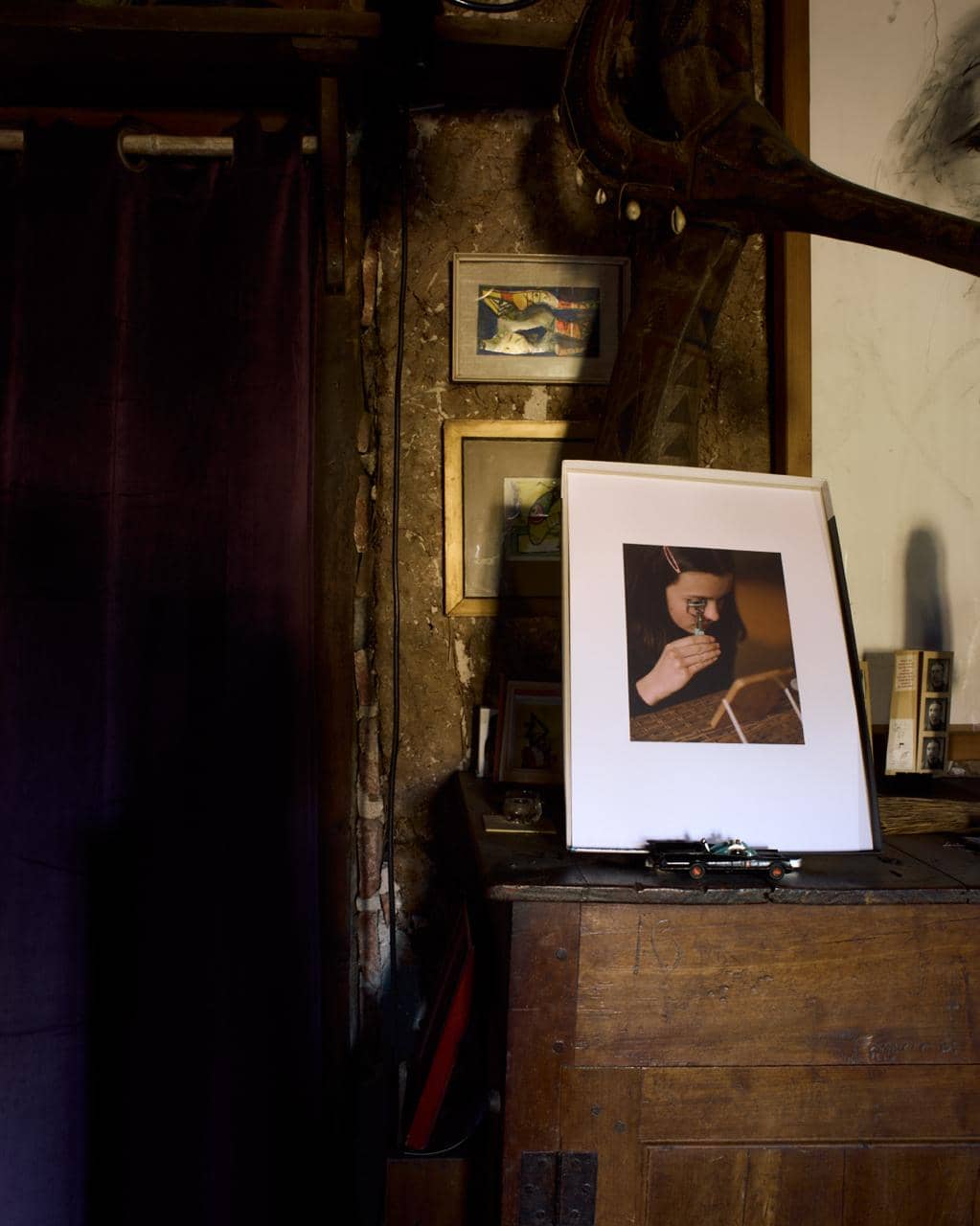
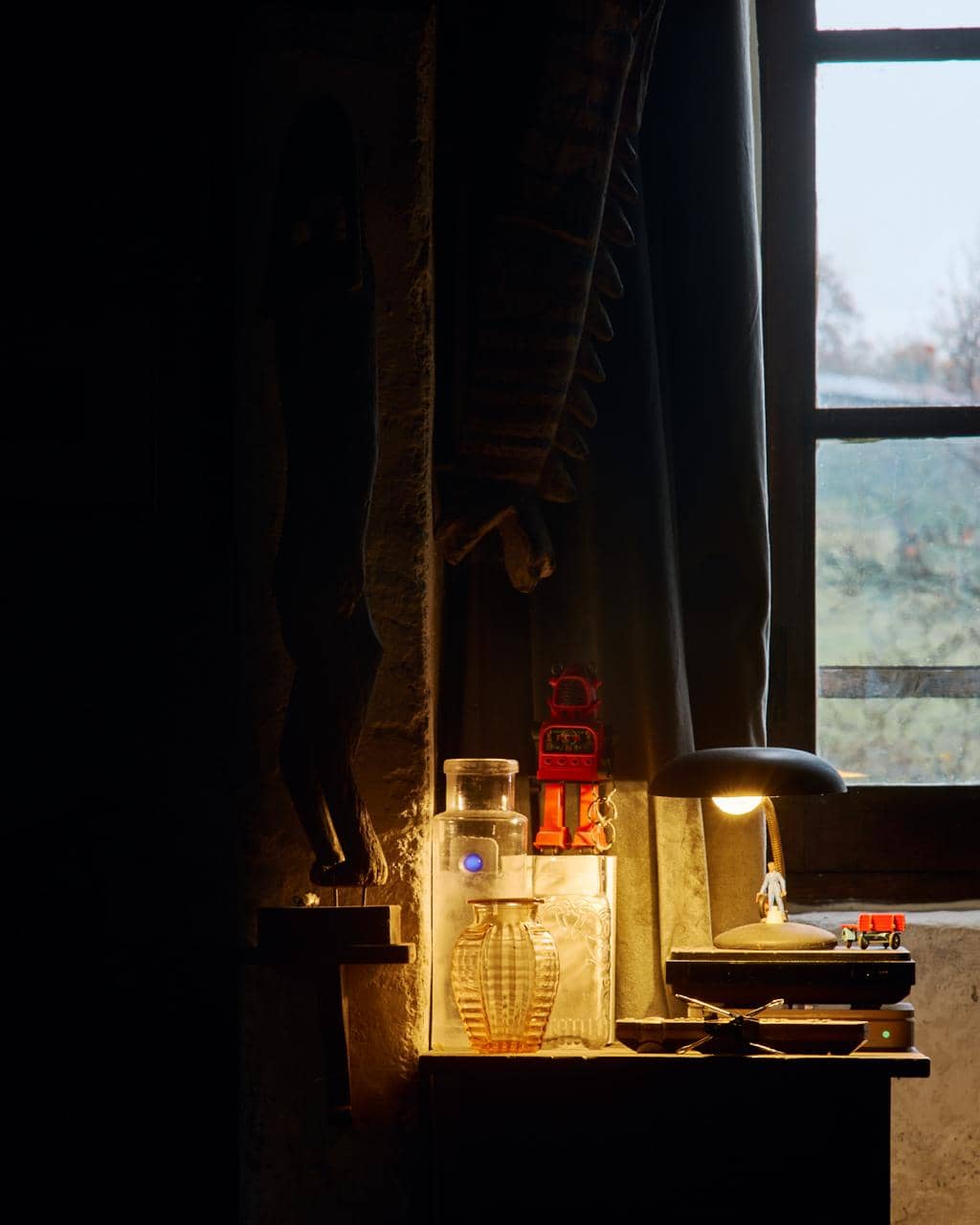
Warm light from a desk lamp falls on a dark wooden surface near a window. Objects arranged: a vintage red robot toy, a clear glass jar with a glowing blue orb, a ribbed amber vase, a small figurine atop a record player, a tiny red toy truck. To the left, a dark carved wooden sculpture stands on a shelf against a rough stone wall. Heavy dark curtains frame the window, through which a muted, overcast sky is visible.
The title steals from Magritte: “L’Empire des Lumieres,” his painting of a nocturnal street under a daytime sky. Here, the empire is not the sky but the desk, the lamp, the curated clutter. The blue orb glows like a miniature moon; the red robot feels like a sentinel. The scene is staged, surreal, but smaller, domestic. The window offers no street, only gray light.
What holds the image together is the tension between interior and exterior. The lamp creates a pool of warmth, a private empire. The window offers a cold, diffuse outside. The objects are toys, knick‑knacks, perhaps symbols of memory or whimsy. They feel collected, not accidental. The photograph is about control: the control of light, of arrangement, of reference.
I distrust the ease of the Magritte reference. His painting is about the uncanny collision of times of day. This photograph is about the cosy uncanny, a safer strangeness. Yet the glow of the blue orb lingers. It is the only source of colour that feels alien, a borrowed light from another empire. The image works when it forgets Magritte and becomes its own small, luminous clutter.