Chloris - 2024
Chloris - 2024
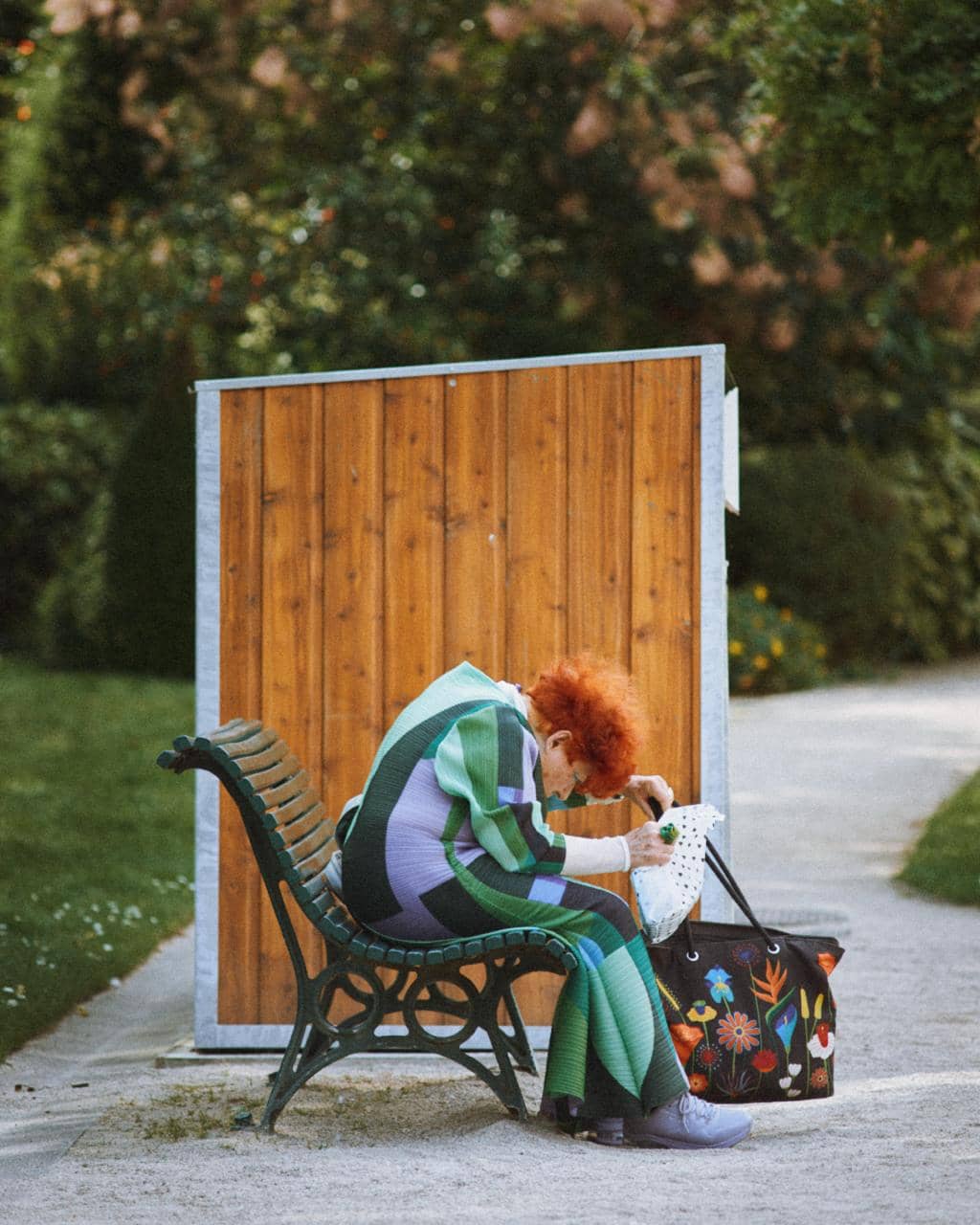
Vibrant red hair, curly, against a dark green metal bench. The woman is elderly, leaning forward, examining something small in her hands—a white bag, perhaps. She wears a bold ribbed knit dress: geometric blocks of green, purple, black. Light purple sneakers. Beside her, a large black tote bag adorned with colourful folk‑art floral embroidery. Behind her, a tall rectangular wooden structure with a light gray metal frame.
The title names her Chloris, Greek goddess of flowers, spring. The photograph does not make that connection explicit, but the embroidered flowers on the tote, the green of the bench, the purple in her dress—they hint at a floral theme. Yet the woman is old, her posture intent, her hair defiantly red. This is not a goddess of youth; this is a goddess who has aged, who still carries flowers.
What holds the image together is the clash of vitality and time. The colours are vibrant, the patterns bold, but the body is bent, the hands occupied with a small, mundane task. The photograph avoids sentimentality by keeping the woman’s face hidden, focusing instead on her attire, her bag, her posture. She becomes a composition of textures: knit, embroidery, metal, wood.
I distrust the ease of the mythological reference, but the image earns its gravity through colour. The green bench echoes the green in her dress; the purple sneakers pick up the purple in the blocks. The composition feels both accidental and deliberate, as if the photographer waited for the right collision of hues.
The risk is that the photograph becomes merely decorative, a pleasant arrangement of colours. Yet the woman’s intensity saves it. She is not posing; she is examining. That focus, private and unperformative, gives the image its weight. Chloris is not here to be looked at; she is looking. That reversal makes the picture work.