Claiming an Empty Seat
Claiming an Empty Seat
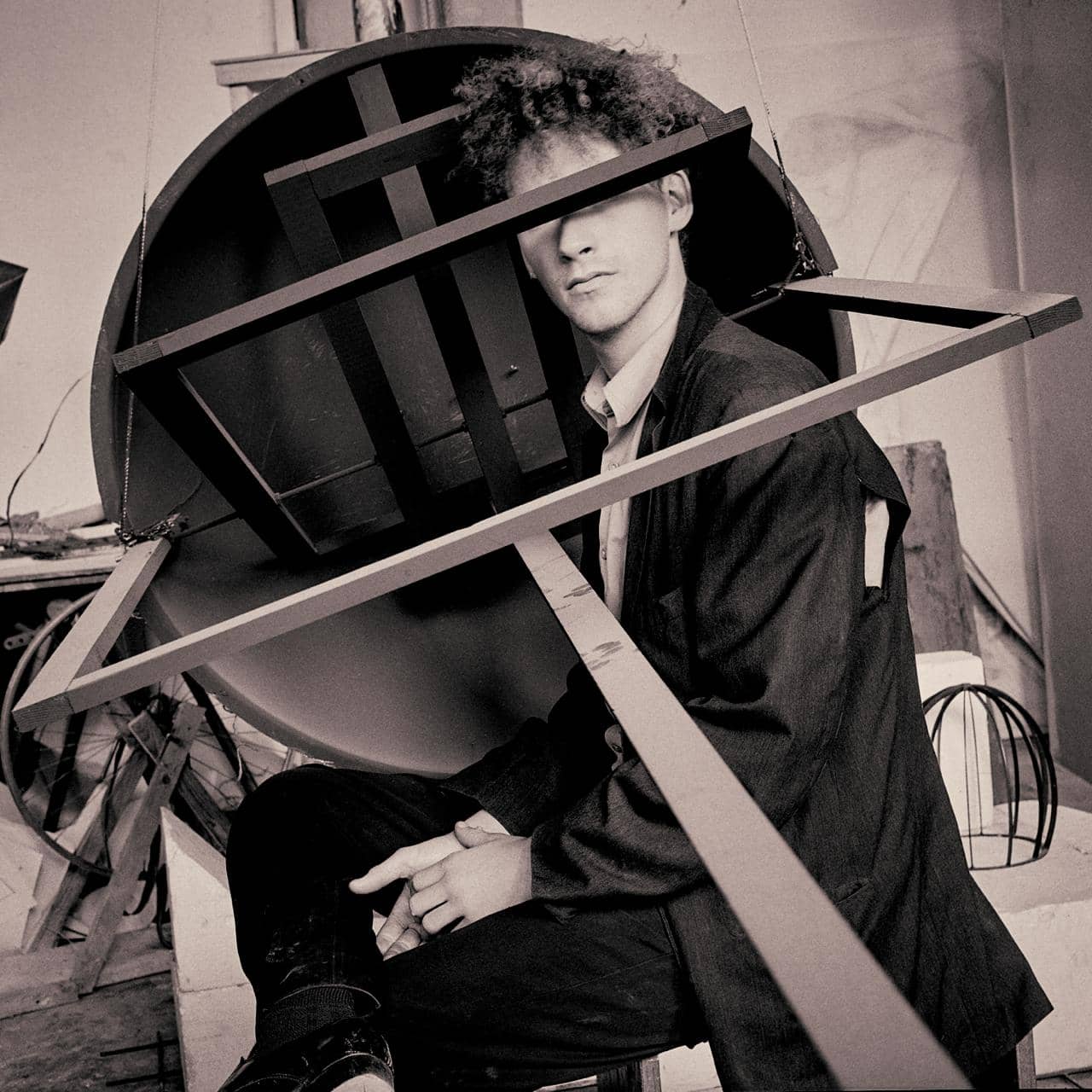
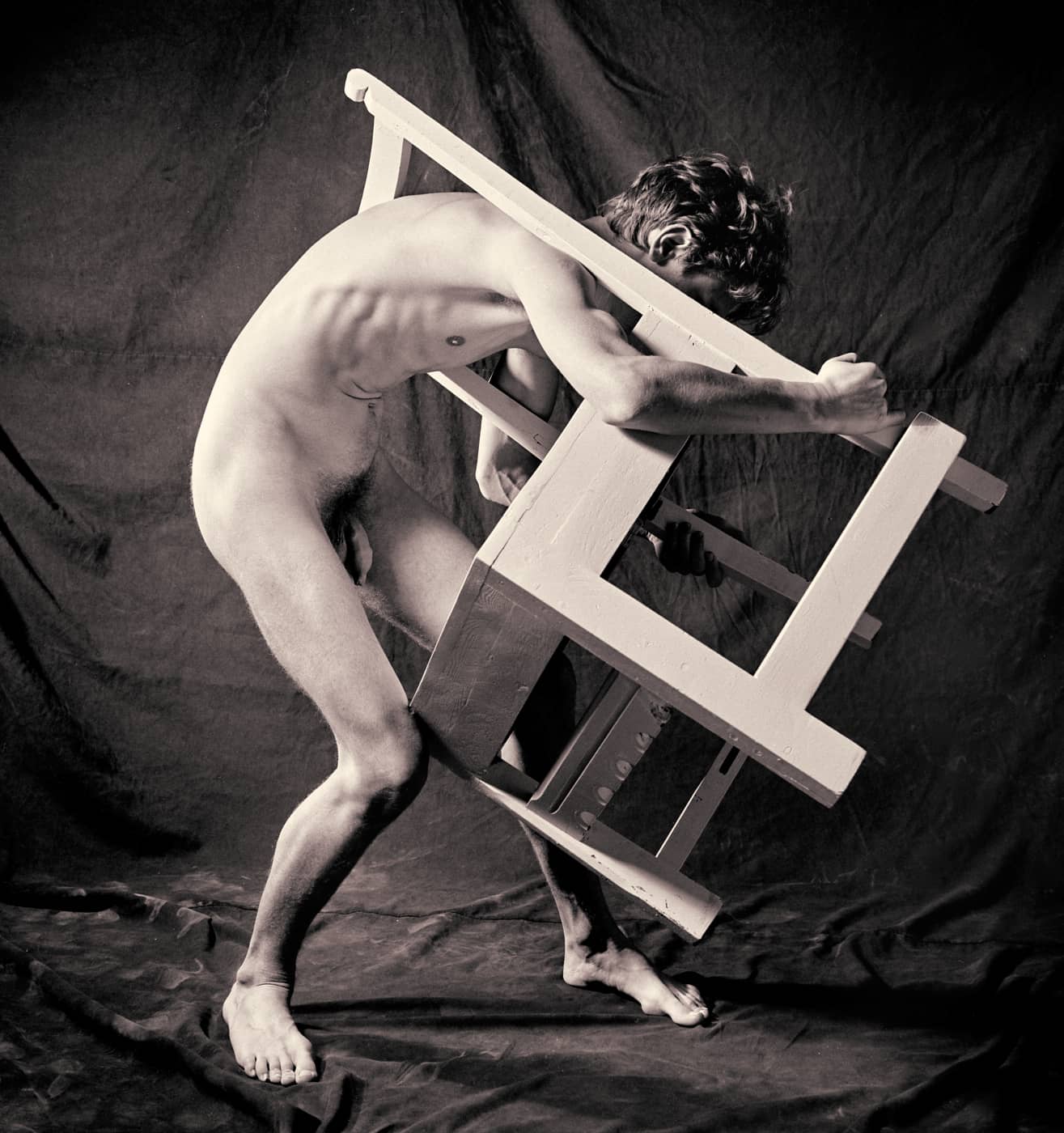
A man bends forward, holding an upside-down wooden chair. His back is arched, head lowered, feet planted on dark fabric. Light from upper left defines his spine, shoulder blades, the curve of his buttocks. The chair’s legs point upward; he grips one leg with his right hand, the frame with his left. Everything is black, white, and gray.
The title says “Claiming an Empty Seat,” but the seat is not empty. It is inverted, held aloft. The man’s posture suggests strain or offering—he presents the chair rather than sitting in it. His face is hidden, turned away. What we see is the labor of holding, not the act of claiming.
This is from the Rietveld/Bajazzo period, when Arthur worked with theatrical poses and studio setups. The image feels staged, yet the physicality is undeniable. The lighting sculpts the body, making muscle and bone visible. The dark backdrop isolates the figure, turning the scene into a diagram of force.
I distrust the ease of reading this as metaphor. The inverted chair could symbolize absence, the bent back burden, the hidden face anonymity. But the photograph’s strength is in its literalness: a man holding a chair. The strain in his arms, the tension in his back, the weight distribution in his feet—these are real, not symbolic. The problem is that the setup feels too clean. The studio drape, the controlled lighting, the deliberate pose: they risk turning physical effort into a well-composed idea. A claim should feel earned, not arranged.