The Widow - 1989
The Widow - 1989
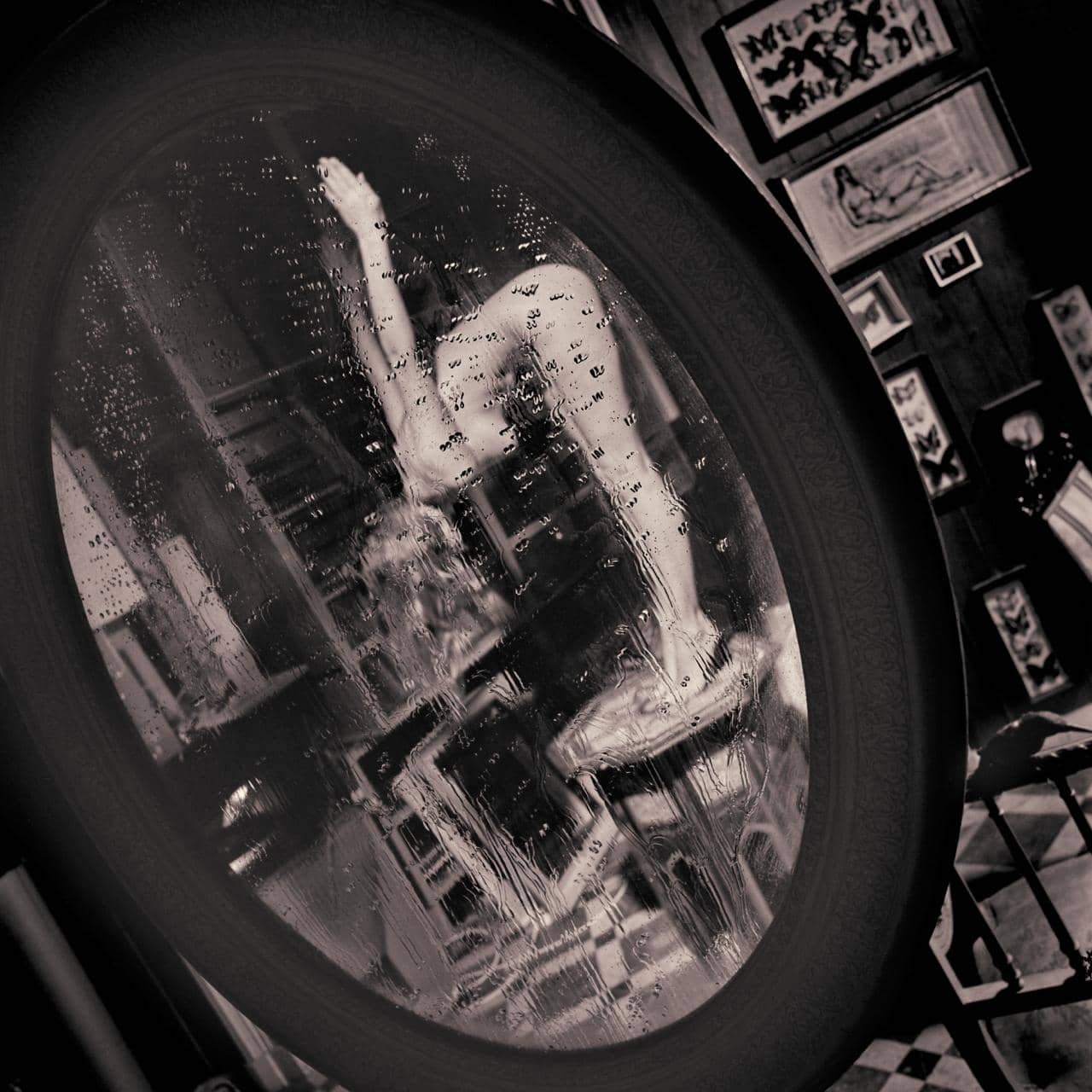
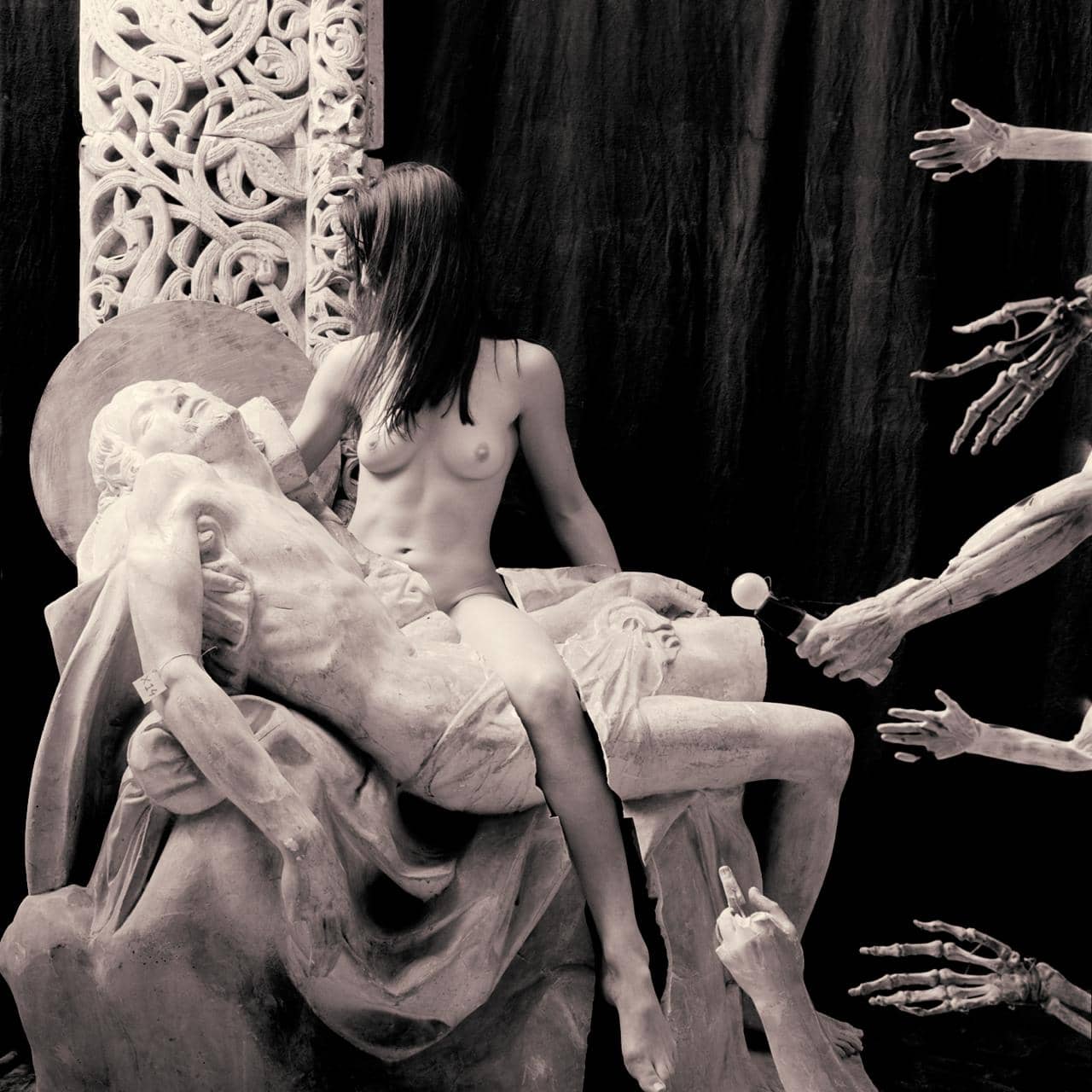
A nude woman with long dark hair sits atop a marble Pietà. Her back is turned, her posture both intimate and invasive. The sculpture beneath her is a fragment of Michelangelo’s famous Pietà from St. Peter’s in Rome—Mary cradling the dead Christ. Around them, disembodied hands and skeletal arms reach from a dark void on the right. One skeletal hand holds a small lightbulb.
The title calls her “The Widow.” The photograph does not explain. It merges classical devotion with surreal intrusion. The woman is not Mary; she is a living body occupying the sacred group. The hands are not helping; they are groping, clutching, illuminating with a bare bulb. The image feels like a violation, and that is its power.
This is 1989, the period of La Photographie Égoïste. The folding technique is not visible here, but the gesture of inserting the self into art history is. The photograph does not respect the masterpiece; it uses it as a stage for a contemporary, uneasy performance. The widow is not mourning; she is taking possession.
I am not sure whether the surreal elements help or distract. The lightbulb is almost too literal—an idea illuminated. Yet the hands are genuinely unsettling. They turn the Pietà into a site of haunted agency, where the dead are not at peace and the living are not welcome.
The photograph risks being merely theatrical. But the woman’s naked back, the precise carving of the marble, the stark black‑and‑white contrast—they hold the composition together. The image does not look away from its own blasphemy. It stares, and asks us to stare too.