Nude - 1985
Nude - 1985
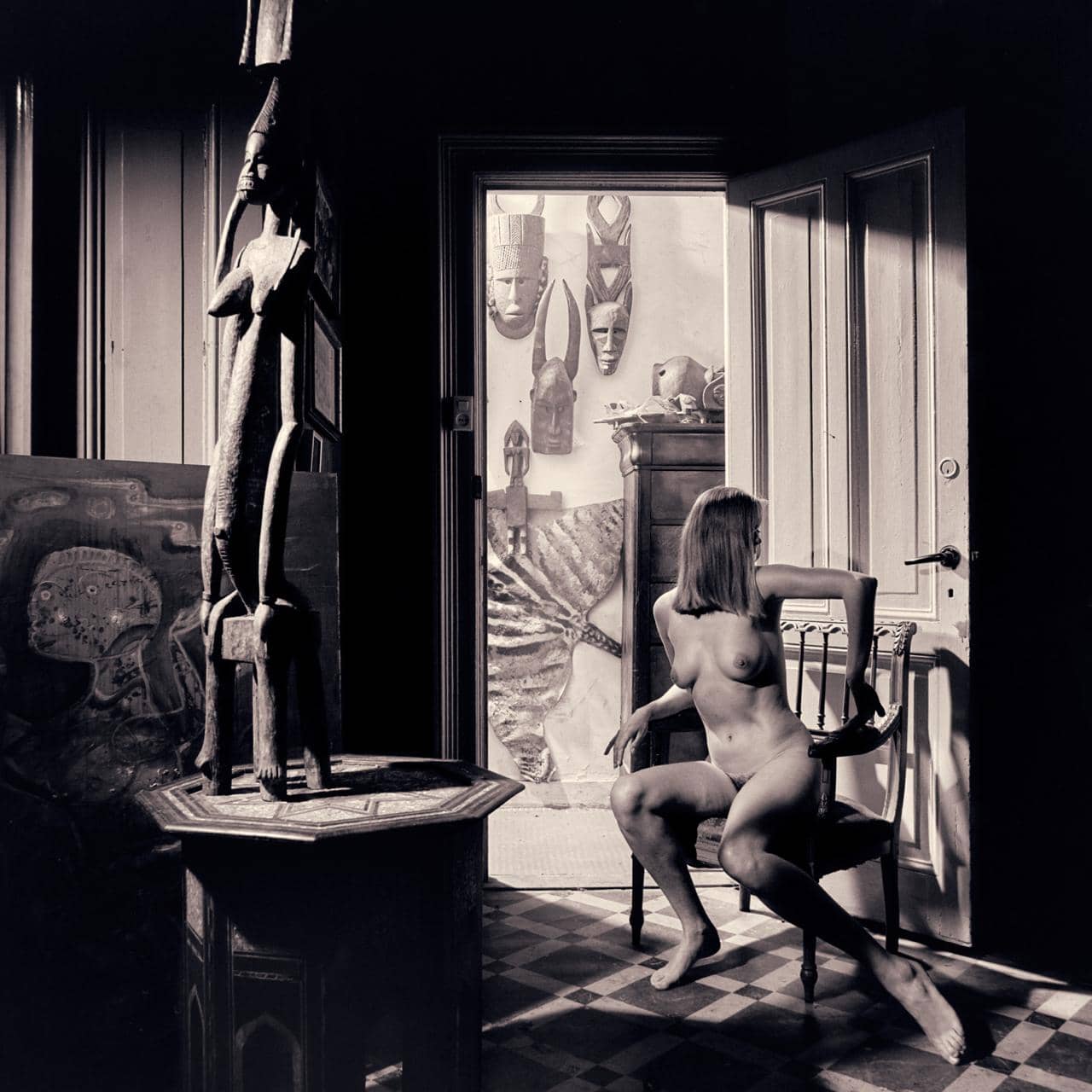
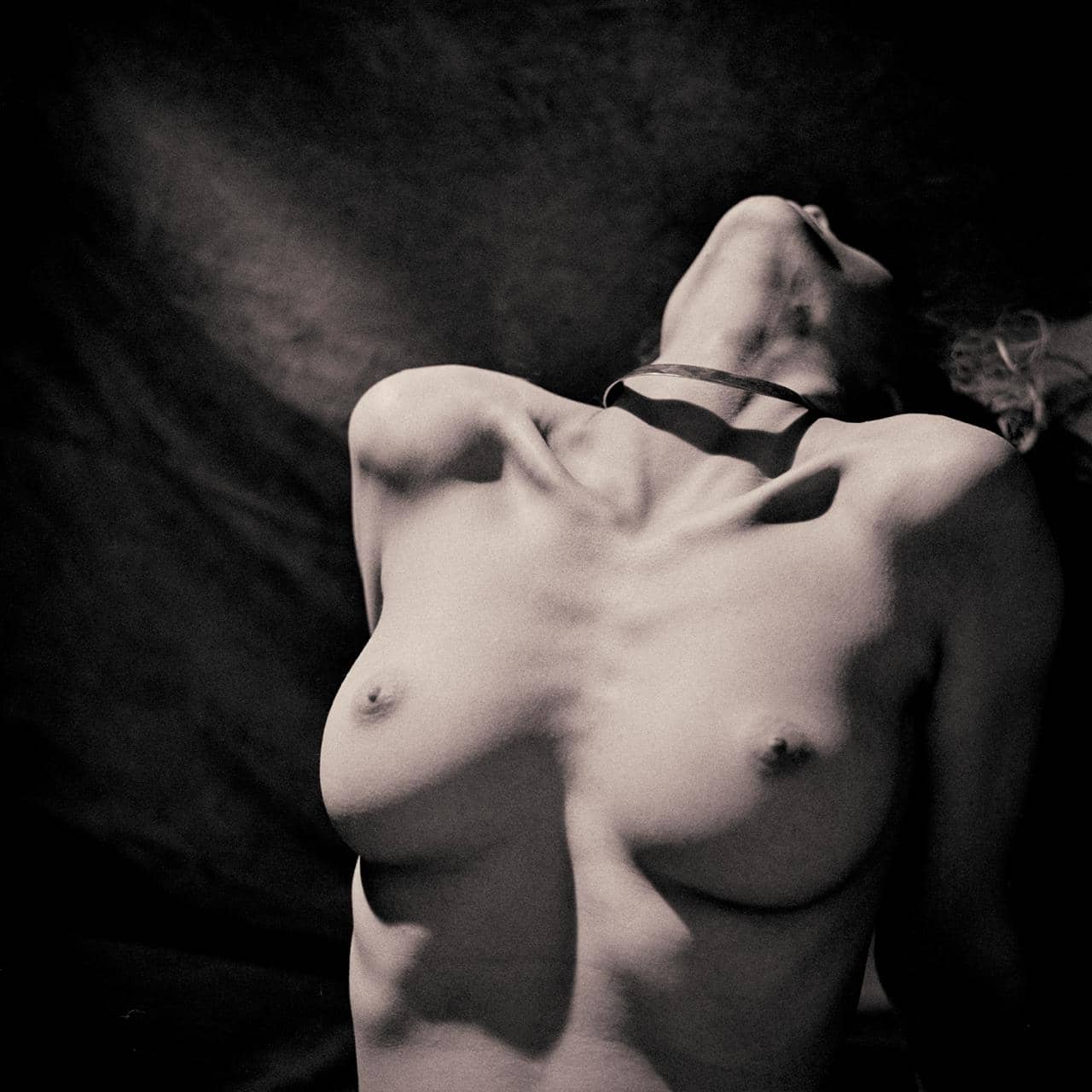
A throat exposed, head tilted far back, face lost in shadow. A thin dark strap rests across the collarbone. Directional light sculpts the torso, sharp highlights against deep black, breasts defined by contrast. The body fills the frame, anonymous, vulnerable, or ecstatic—it is hard to tell.
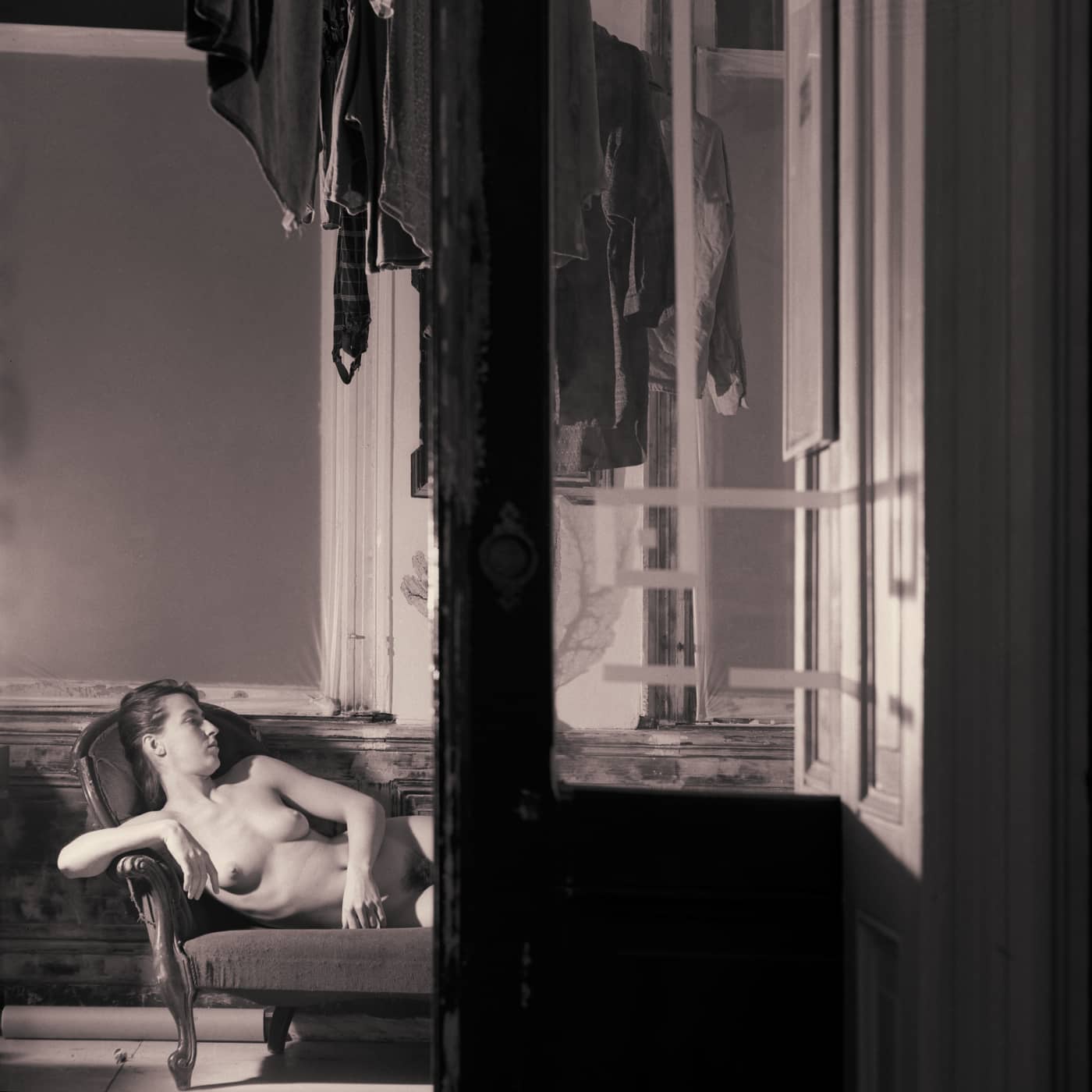
The title is simply “Nude.” No pretense, no metaphor. This is 1985, the Bajazzo period, a time of flamboyance and posed intensity. Here, the flamboyance is stripped back to light and shadow. The image feels both classical and urgent, a study in form that cannot quite escape the erotic charge of its subject.
What holds the image together is the tension between abstraction and intimacy. The lighting is so dramatic, so sculptural, that the body becomes almost a landscape of peaks and valleys. Yet the strap, the throat, the tilt of the head—these details insist on a person, a moment, perhaps a private transaction between photographer and model.
I distrust the ease with which the photograph slips into the tradition of the artistic nude. The high contrast, the obscured face, the emphasis on curves: these are familiar devices. Yet the image earns its gravity through sheer formal control. The black is absolute, the white searing, the gradations precise. It is a photograph that knows exactly what it is doing, even if what it is doing is not new.
The risk is that the image becomes merely beautiful, a technically accomplished study. But the tilt of the head, the vulnerability of the throat, pushes back against pure formalism. Something here feels surrendered, not just displayed. That surrender, whether performed or real, gives the photograph its sting.