Root down - 2024
Root down - 2024
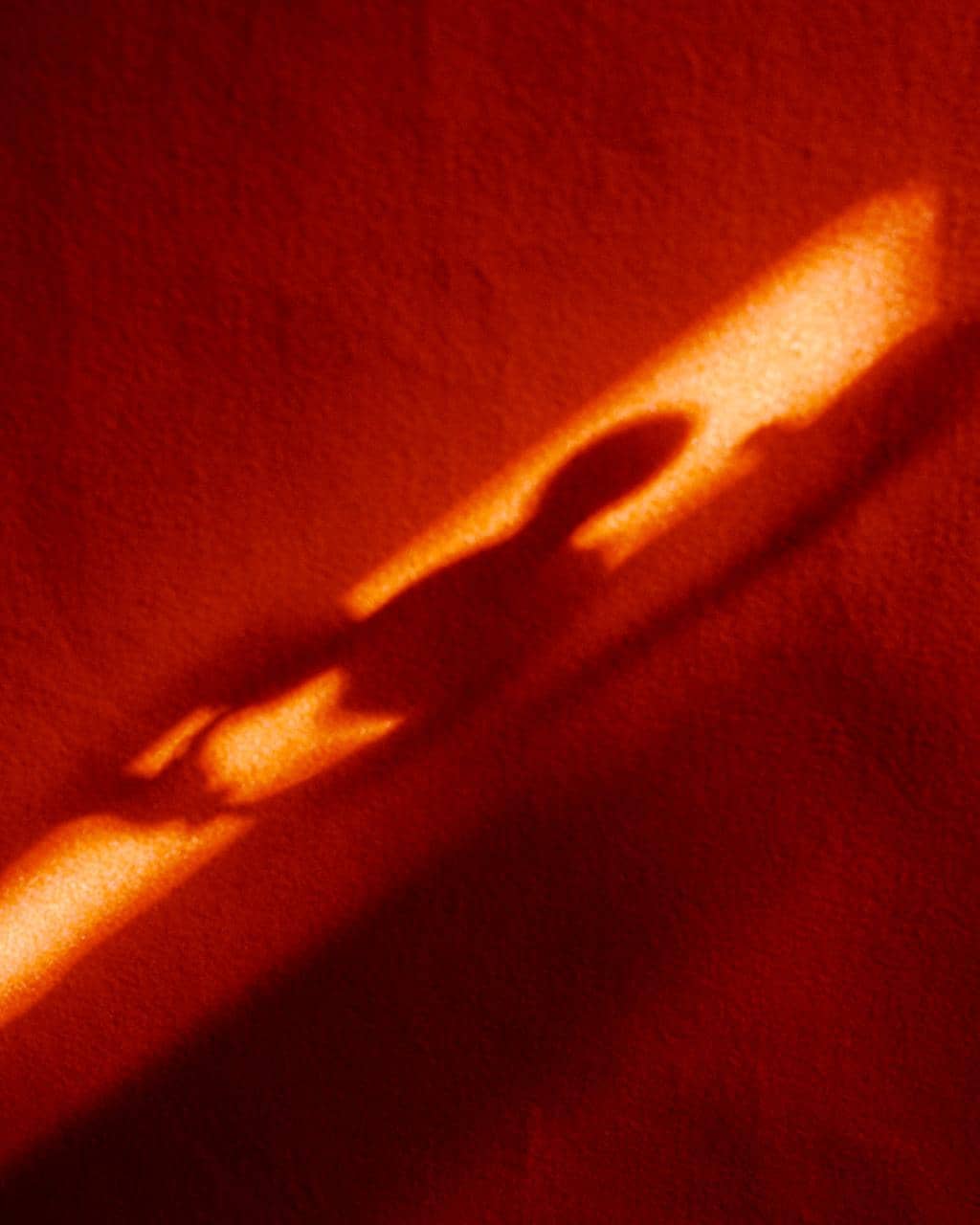
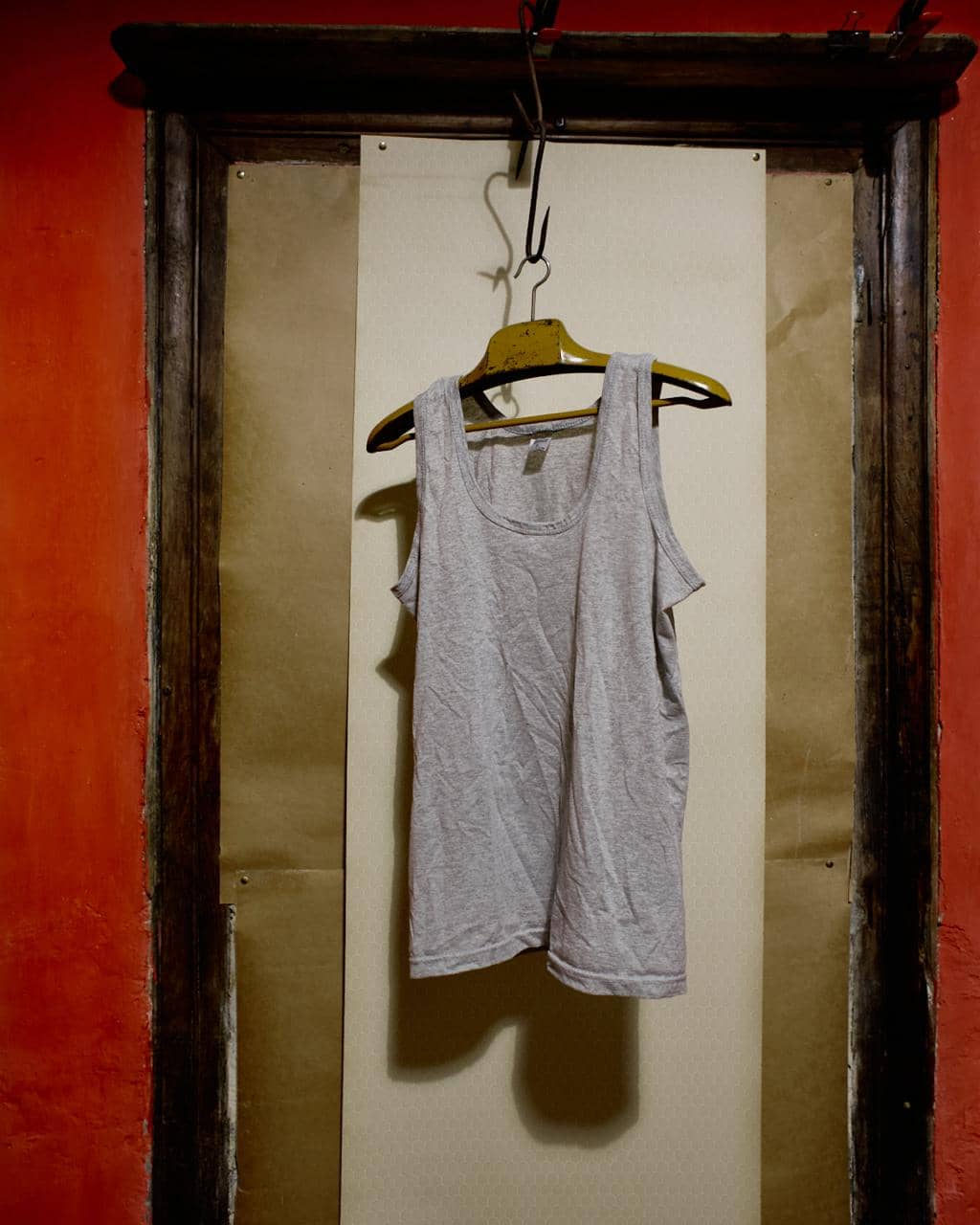
A gray tank top, wrinkled, hangs on a yellow wooden hanger. The hanger is hooked onto a black metal wire attached to a dark, weathered wooden frame. Behind, a textured off‑white paper backdrop. The frame sits within a vibrant orange‑red wall, rough‑textured. Shadows of the tank top and hanger fall sharply onto the paper, adding depth. The scene feels staged, deliberate.
The title, “Root down,” suggests grounding, but the garment is suspended, rootless. The tank top is empty, a body’s absence. The yellow hanger is the brightest thing, a slash of colour against gray and orange. The composition is simple, almost minimalist, yet the colours clash: orange against off‑white, yellow against gray. This is not quiet; it is loud in its restraint.
What holds the image together is the tension between object and environment. The tank top is mundane, domestic. The wall is intense, almost aggressive. The photograph elevates the ordinary by placing it in a field of colour that refuses to be background. The sharp shadows turn the scene into a study of light and form, but the emotional weight comes from the garment’s emptiness.
I distrust the ease of the minimalist gesture, but the photograph earns its gravity through colour. The orange is too vivid to be mere backdrop; it becomes a presence, a wall that contains the frame that contains the hanger that holds the shirt. Each layer feels like a metaphor for containment, perhaps for how we frame our own absences.
The image belongs to Easy Realism, which trusts reality without polishing it. Here, reality is already polished—staged, lit, composed. Yet the wrinkles in the tank top resist perfection. They are the root down, the reminder that even in arrangement, something remains unkempt.