Scourers in dramatic light - 2020
Scourers in dramatic light - 2020
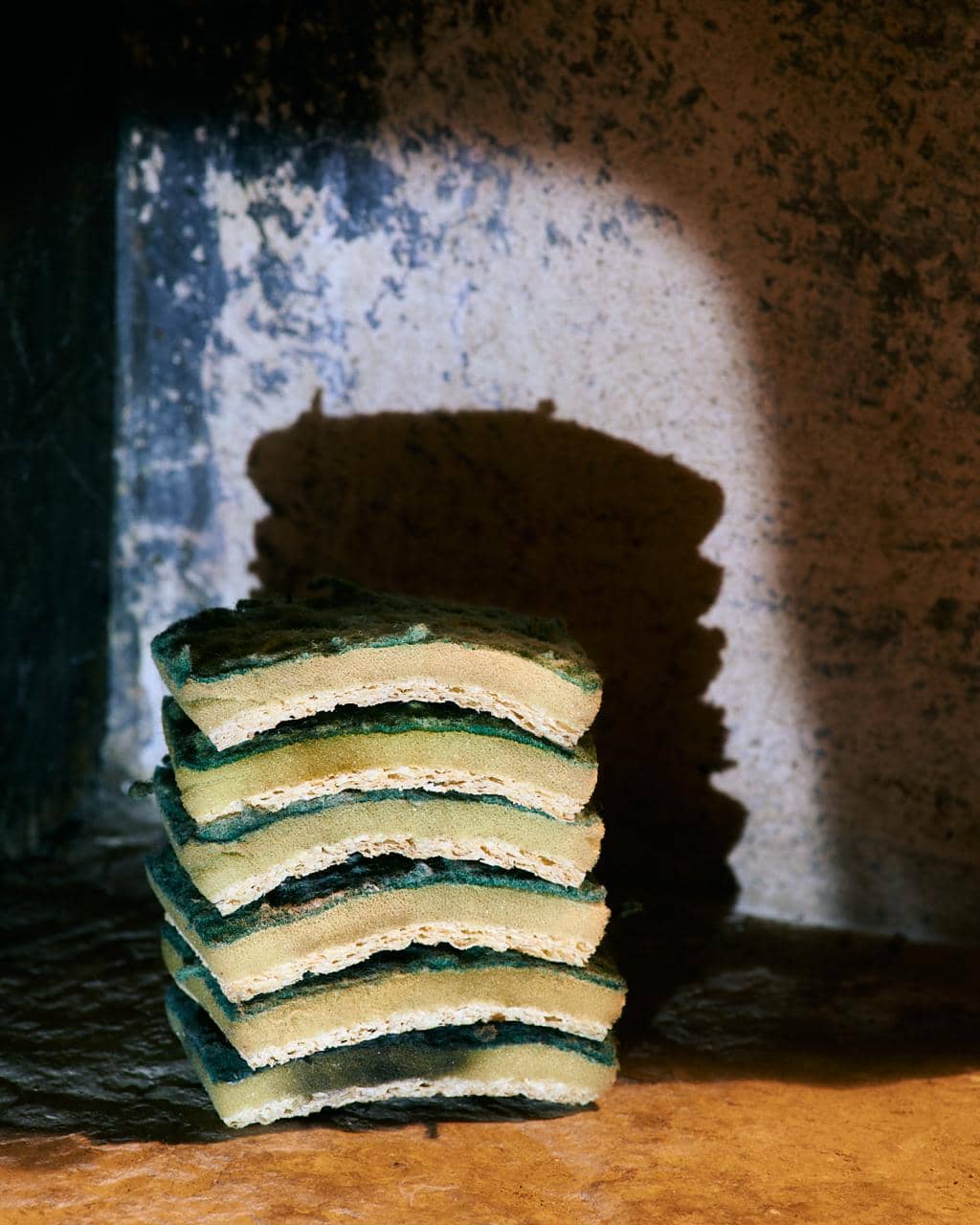
Six worn kitchen sponges sit stacked. Yellow‑beige on one side, dark green on the other. They are slightly warped, frayed at the edges. A dramatic beam of light hits them from the side, casting a sharp, elongated shadow on a rough, mottled wall behind. The sponges rest on a textured, warm‑toned surface. The light is theatrical, almost violent.
The title says “Scourers in dramatic light.” The photograph does not hide its artifice. The light is staged, the shadow is composed. Yet the sponges are genuinely used—dirty, battered, humble. The contrast feels both sincere and ridiculous. I am not sure whether the drama elevates the mundane or mocks it.
This is Easy Realism in 2020, but with a twist: the realism is not easy. The light is manipulated, the scene is set. Yet the objects are not polished; they are worn. The photograph trusts that the sponges, in their actual state, can bear the weight of dramatic treatment. And they do, because their texture is real, their wear is earned.
I keep looking at the shadow. It is cleaner, sharper than the sponges themselves. It turns the messy objects into a graphic form. That feels like a cheat, but also like an insight: even the most ordinary thing can become monumental under the right light. The photograph knows it is playing with scale and importance, and does not apologize.
The risk is that the image becomes merely a formal exercise—a study in light and texture. But the sponges’ specific wear, their two‑toned color, their stacked disorder, save it from abstraction. They are still kitchen tools, still cheap, still spent. The drama does not erase that; it frames it. The frame may be too emphatic, but the objects hold their ground.