Rudi van Dantzig - 1986
Rudi van Dantzig - 1986
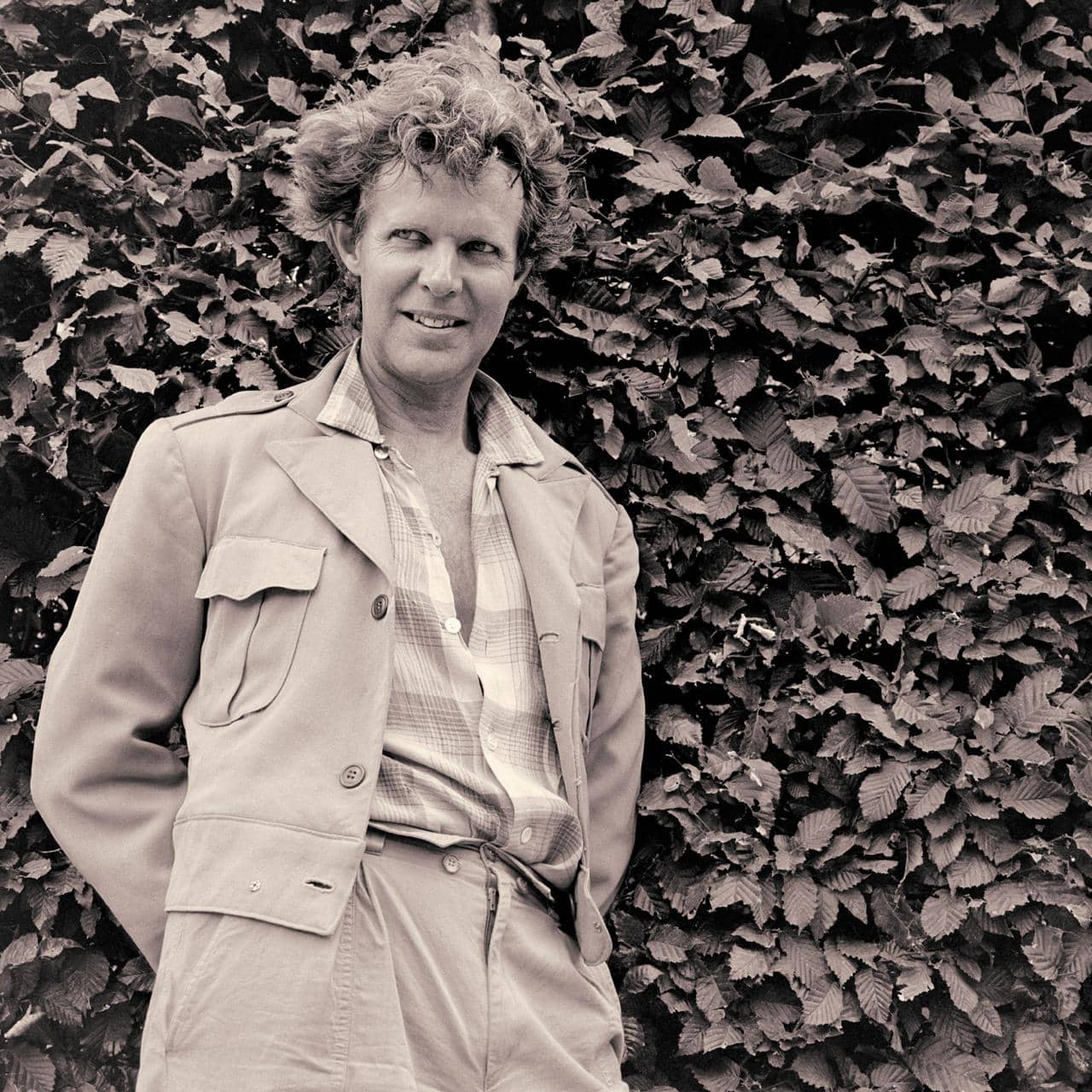
The hedge is dense, a wall of small leaves that swallow detail. Rudi van Dantzig stands before it, wearing a light jacket over a plaid shirt, hands in pockets. His hair is curly, light. He smiles gently, looking just off-camera. The black-and-white tones are soft, the contrast high enough to pick out the texture of the cloth and the foliage.
This is 1986, the Bajazzo period. The portrait was made for De Held, a literary magazine. Van Dantzig was a choreographer, a writer; his novel “Voor een verloren soldaat” appeared that same year. The image presents him not as a stage figure but as a man at ease. The pose is casual, almost informal. Yet the hedge frames him like a backdrop, neither natural nor constructed, just a mass of green that refuses to recede.
What holds me is the smile. It is warm, unforced, but it also feels like a performance of approachability. The hands in pockets suggest relaxation, but they also hide. The plaid shirt open at the collar speaks of leisure, not labor. This is a portrait of an artist as a private person, offered for public consumption.
The photograph does not try to reveal inner life. It shows a surface: friendly, accessible, slightly reticent. In that reticence lies its strength. Van Dantzig made bodies speak on stage; here his own body is quiet, giving little away. The image trusts that the lack of drama is enough. I am not sure it is, but I keep looking at the hedge, wondering what it hides.